Qcells
Best fitTurnkey and value-focused homeowner systems
Large U.S. market presence, broad installer availability, and strong mainstream panel options.

Independent solar education for homeowners comparing full turnkey installation, battery backup, and practical DIY paths in Florida, Texas, and other solar-friendly states.
Florida homeowners often start with net metering, storm backup, and roof readiness. Texas homeowners need utility-specific buyback rates and retail electric plan modeling.
| State | Rule to verify | Best homeowner fit | Status |
|---|---|---|---|
| Florida | Florida Rule 25-6.065 governs customer-owned renewable generation for investor-owned utilities. Monthly credits generally roll forward, while annual excess compensation depends on the utility tariff. | Homeowners with high electric bills, newer roofs, limited shade, and interest in battery backup before hurricane season. | Priority |
| Texas | Texas solar compensation is utility- and retail-plan-specific. Homeowners should compare buyback plans, delivery charges, export caps, and contract changes before signing. | Homeowners with deregulated-market shopping flexibility, high summer bills, EV charging, or interest in backup power. | Priority |
| California | Net billing rules reward self-consumption and time-of-use strategy more than traditional one-for-one exports. | High-use homes, EV owners, and homeowners willing to pair solar with storage. | Tracked |
| Arizona | Export compensation varies by utility and tariff. Homeowners should check current rate plans before sizing. | Homes with high cooling loads, durable roof planes, and interest in battery load shifting. | Tracked |
| Nevada | Net metering rules and program caps should be verified with the serving utility before contract signing. | Homes with strong daytime usage, EV charging, or battery plans. | Tracked |
| North Carolina | Duke Energy and other utilities have program rules that homeowners should verify before committing. | Homes with good southern exposure and long-term ownership plans. | Tracked |
| Colorado | Net metering and renewable programs are utility-specific and should be confirmed before final design. | Homes with clear roofs, high utility rates, and interest in electrification. | Tracked |
| Virginia | Net metering availability and caps should be checked with the serving utility. | Homeowners with strong roof exposure and stable long-term electricity usage. | Tracked |
Compare where each brand usually fits before you review a quote, battery design, or DIY equipment list.
Best fitTurnkey and value-focused homeowner systems
Large U.S. market presence, broad installer availability, and strong mainstream panel options.
Best fitPremium rooftop systems where roof space is limited
Known for high-efficiency residential modules and strong warranty positioning.
Best fitCost-conscious turnkey projects and larger roofs
Global manufacturing scale and common availability across installer channels.
Best fitTurnkey systems, shaded roofs, monitoring-heavy homeowners, and modular storage
Microinverter architecture is popular for module-level monitoring and flexible roof planes.
Best fitTurnkey systems needing module-level optimization with centralized inverter architecture
Common in residential proposals with monitoring and optimizer-based layouts.
Best fitHomeowners prioritizing whole-home energy ecosystem and backup storage
Powerwall remains a widely recognized residential battery option.
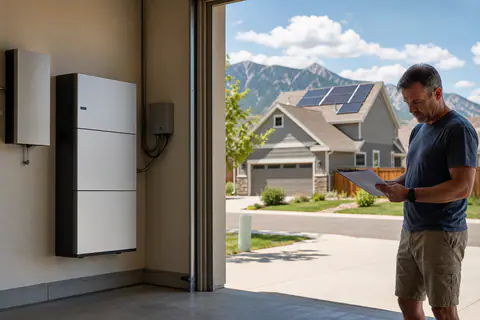
Battery backup can make solar more useful during outages, but homeowners need a critical-load plan, realistic runtime expectations, and a design that fits local storm risks.
Read article
Turnkey and DIY solar can both make sense, but homeowners should choose based on permitting, electrical risk, warranties, utility approval, and how much support they truly need.
Read article
Homeowners should treat federal solar tax-credit claims carefully in 2026, with special attention to placed-in-service dates, documentation, and tax professional review.
Read article
Texas solar buyers need to compare retail electric plans, export credit rules, utility territory requirements, and battery value before trusting a simple payback estimate.
Read article
Florida solar economics depend on utility net-metering rules, roof readiness, tax treatment, storm-resilience goals, and whether the homeowner needs turnkey support or a DIY-friendly path.
Read articleThe quiz screens for state, utility, bill size, ownership, roof condition, shade, solution type, and timeline before routing the homeowner to the right next step.