Why this matters now
Austin families just got a new solar signal. On July 1, Austin Energy raised its home solar rebate from $2,500 to $4,000 for eligible systems over 3 kilowatts. The utility also already has a battery program that can pay some homes for helping during high demand hours. In plain words, one local utility is now saying two things at once. First, it wants more rooftop solar. Second, it wants some batteries ready to help the grid on hard afternoons. That matters to homeowners because it changes the sales pitch. A quote in Austin may now talk about a bigger upfront solar rebate and yearly battery pay in the same meeting.
What Austin is offering in plain words
The solar side is easy to understand. Austin Energy says eligible homeowners can now get up to $4,000 back on a qualifying rooftop solar project. The battery side is different. Austin Energy's Power Partner Battery pilot pays $500 upfront for a battery that gets Permission to Operate after final inspection on or after February 18, 2025. Then the utility says it pays $75 for each average kilowatt your battery provides across events during the year. Its own example shows about $324 a year for one battery. A virtual power plant is just a group of home batteries that help the grid for short times. That sounds helpful, but it is not the same as free backup power.
The battery pay has real limits
The battery program is not a check for doing nothing. Austin Energy says events usually last about two to three hours and can happen up to 40 times a year, not counting grid emergencies. The utility also says families can opt out of events, but that can lower the yearly payment. The battery will serve the home first and then send extra power to the grid. Storm mode can also take priority during severe weather. Another important limit is ownership. Austin Energy says third-party-owned batteries are not eligible. That means a leased battery or other outside-owned setup may not qualify. A solar system is not required for the battery program, but the battery still has to fit Austin Energy's rules and use an eligible installer.
Why this is different from old Texas battery stories
Texas already had battery pay stories from co-ops, retail power plans, and other utilities. This Austin angle is different for one simple reason. The same local utility is now giving a larger rooftop solar rebate and also offering a battery demand program. Fresh trade coverage today also shows Austin Energy still pushing this path while FranklinWH adds support for the utility program. That does not mean every family should rush out and buy a battery. It does mean Austin homeowners should ask for a quote that shows the stack clearly. How much is the solar rebate? How much battery pay is realistic for your battery size? What happens if you opt out during heat waves or storm risk?
The money math families should ask to see
Ask the installer to separate the numbers on one page. You want the solar price before rebates, the Austin rebate amount, the battery price, and the expected yearly battery payment. Ask which parts are guaranteed and which parts are only estimates. Ask if the quote quietly assumes any federal homeowner tax credit for a new 2026 system purchase. Do not allow that unless the seller proves it with current official rules, because cash and loan buyers generally cannot count on that credit for new 2026 home projects. Also ask how the battery is set for backup reserve. A lower reserve may raise yearly program pay, but it can leave less stored power for your own outage needs. The best plan for your bill is not always the best plan for your fridge, lights, and cooling during a blackout.
Simple homeowner checklist
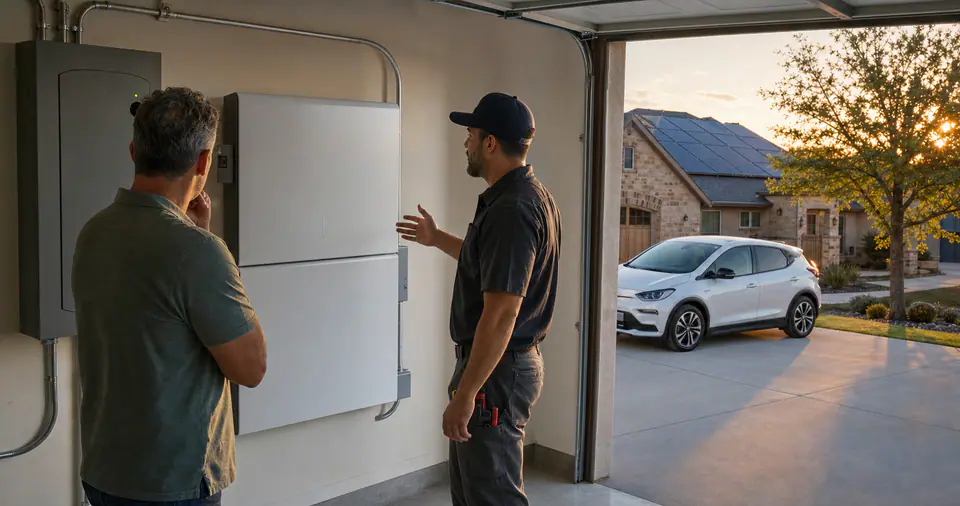
Ask if your roof and electric panel qualify for the Austin solar rebate. Ask if the battery is owned by you, not by a third party, and whether it is on Austin Energy's eligible list. Ask what stays on during an outage and how many hours the battery is expected to cover. Ask how many Power Partner events the installer assumes in the yearly savings math. Ask if a solar system is required for the battery quote or if the battery can stand alone. Ask how quickly the battery can recharge after an event or outage. Ask who handles permits, final inspection, and utility approval. Ask for the quote again with no 2026 federal homeowner tax credit assumption unless the seller can show a current official rule that applies to your ownership plan. If the math still looks good after those questions, then you have a real offer to compare.