Know who you are dealing with
In Texas, the company knocking on the door may not be the company installing the panels. Ask for the seller name, installer name, lender name, and service phone number. Write them down. If one company blames another later, you will know who promised what.
Read the payment part slowly
Solar can be sold as cash, loan, lease, or power agreement. These are not the same. A low monthly payment can hide a higher total cost. Ask for the cash price and the financed price. Ask if there is a dealer fee. Ask what happens if you pay the loan off early. Ask if selling the home becomes harder.
Check your right to cancel
Do not sign if you feel rushed. Ask how many days you have to cancel. Ask how to cancel in writing. Ask what money, if any, is not refundable. Keep a copy of the signed contract, the cancellation page, and all emails or texts.
Ask about Texas registration
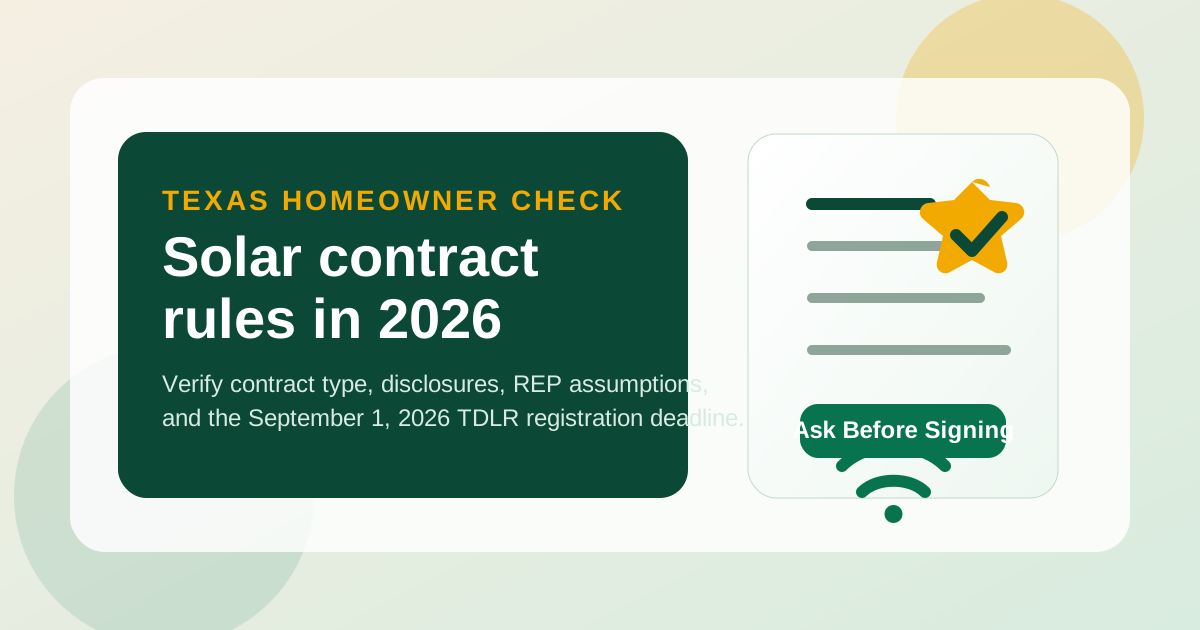
Texas has new registration rules coming for residential solar retailers. Ask the seller how they are preparing. This does not mean every quote is bad. It means homeowners should expect clean paperwork, clear company names, and honest claims about savings.
Do this before you sign
Ask for the exact electric plan used in the savings math. Ask who handles permits and utility approval. Ask what the warranty covers. Ask who fixes roof leaks. Ask for all promises in writing. If the salesperson says, do not worry about that, you should worry about that.
Red flags to slow down for
Slow down if the salesperson says the deal is only good today. Slow down if they will not leave the contract with you. Slow down if they cannot explain the loan. Slow down if the savings number depends on a tax credit you may not get. A good company should give you time to read, compare, and ask questions before you decide at home calmly.