Why this matters in Florida now
Duke Energy Florida says more than 75 homes in Orlando's Hunter's Creek neighborhood now have home batteries in a long pilot project. The utility says the test will last 10 years. The goal is to learn when home batteries help both the family and the grid. That matters in Florida for two clear reasons. Summer peaks are hard on the grid. Storm outages are hard on families. A battery can help with both, but only if the setup is planned well. This is not a statewide offer for every home today. It is still useful news because it shows what utilities want from home batteries next.
What the pilot really does
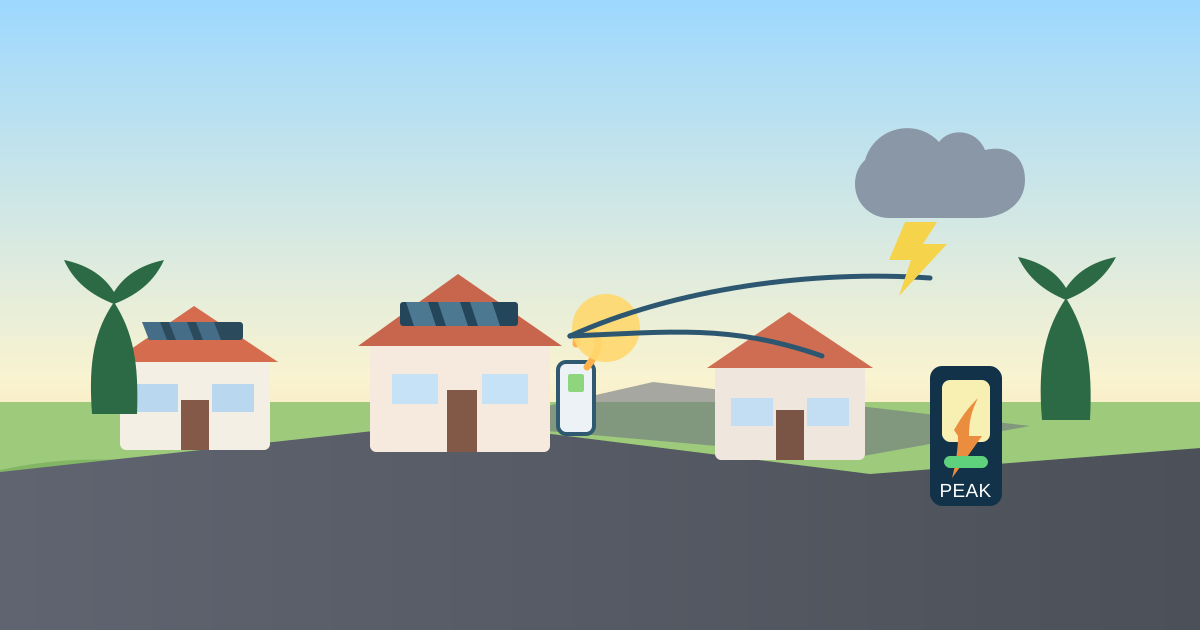
Duke says the batteries can discharge for one to three hours on high-demand days. In plain words, the utility may ask many homes to send stored power at the same time. That can lower stress on the grid during busy hours. Duke also says the same battery can give backup power during an outage. The pilot uses Generac battery systems. Duke says the project does not change the participants' utility bills during the test. That is important. This pilot is about learning, not about showing the best deal a shopper can buy today. Still, it gives homeowners a real picture of how utilities may use batteries in the future.
Backup power still comes first
A battery is not magic whole-home power by default. Duke says pilot homes will have stored energy for select areas of the home during service interruptions. Those words matter. Select areas is not the same as everything. Generac says battery owners in Duke programs can set a backup reserve in the app. That reserve is the part of the battery you keep for your own house. If your family wants the fridge, some lights, internet gear, garage access, and one small cooling plan during an outage, ask your installer to show that list in writing. Ask how many hours those loads may last. Ask what happens after a cloudy storm day too.
Who controls the battery and how often
Generac's Duke program page gives a simple preview of utility battery control outside Florida. It says Duke may call on the battery one to three hours at a time and up to 36 times per year in the Carolinas programs. Duke's own battery control page says customers can receive monthly bill credits for continued participation. That does not mean Florida homes have that same offer today. It does show the kind of rules a future program may use. So ask who can dispatch the battery, how often events may happen, and whether you can change the reserve before a storm. A good full-service installer should answer those questions in plain words.
What this means if you are shopping now
The Orlando pilot shows where the market is going. Utilities like batteries because they can help at the exact hours when power is most expensive and the grid is most strained. Homeowners like batteries because outages are stressful and evening power can cost more. That does not mean every battery quote is a good buy. Ask if the system is being sold mainly for backup power, for bill savings, or for a future utility program. Ask if the hardware is already approved for your power company. Ask who handles utility approval, permits, and app setup. If you are comparing full-service installers, ask each one to show the same outage-load plan and the same rate-plan math.
Do not use old tax-credit math
For a new 2026 home project, clean math matters more than ever. The IRS says the Residential Clean Energy Credit is not available for property placed in service after December 31, 2025. That means a seller should not use the old homeowner federal credit to make a 2026 battery quote look easier. Put the battery cash price on one line. Put any local rebate on another line. Put any utility bill credit or event pay on another line. Then ask how much backup power you really get for that money. Clear math is easier to trust.
Simple homeowner checklist
Ask what stays on during an outage and for how long. Ask whether the battery is set up for part-home backup or a bigger whole-home plan. Ask who controls the battery during utility events. Ask how often events may happen and how long they last. Ask whether your utility already has an approved home battery program for your address. Ask who handles permits and utility approval. Ask for one sheet that shows system price, reserve settings, outage loads, and any program pay with no old federal homeowner credit mixed in.