Why this is trending now
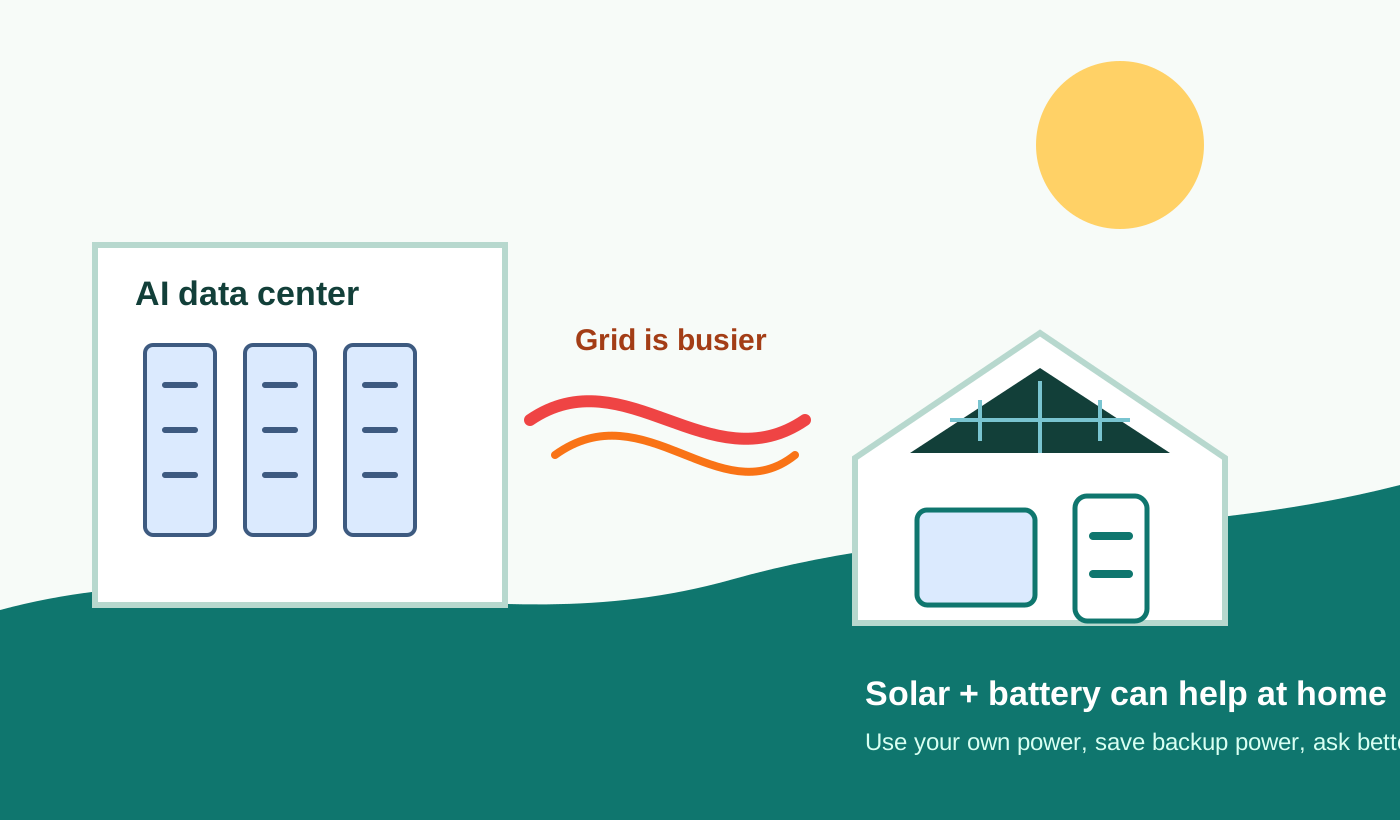
AI tools feel simple when you type a question. Behind the scenes, big buildings full of computers are working hard. These buildings are called data centers. They use a lot of power all day and all night. The U.S. Department of Energy says data center power use has already grown a lot and may grow much more by 2028. The EIA also says server power use is rising across commercial buildings. For homeowners, the point is simple. The grid is being asked to do more work.
What this can mean for your home
A data center does not connect to your kitchen outlet. But many large power users in one area can still affect the local grid. More demand can mean more grid upgrades. It can also mean more pressure during hot afternoons, cold snaps, and evening peaks. That does not mean every bill will jump because of AI. Power bills have many causes. But it does mean homeowners should care about how much power they buy from the grid and when they need it most.
Solar helps you make some power at home
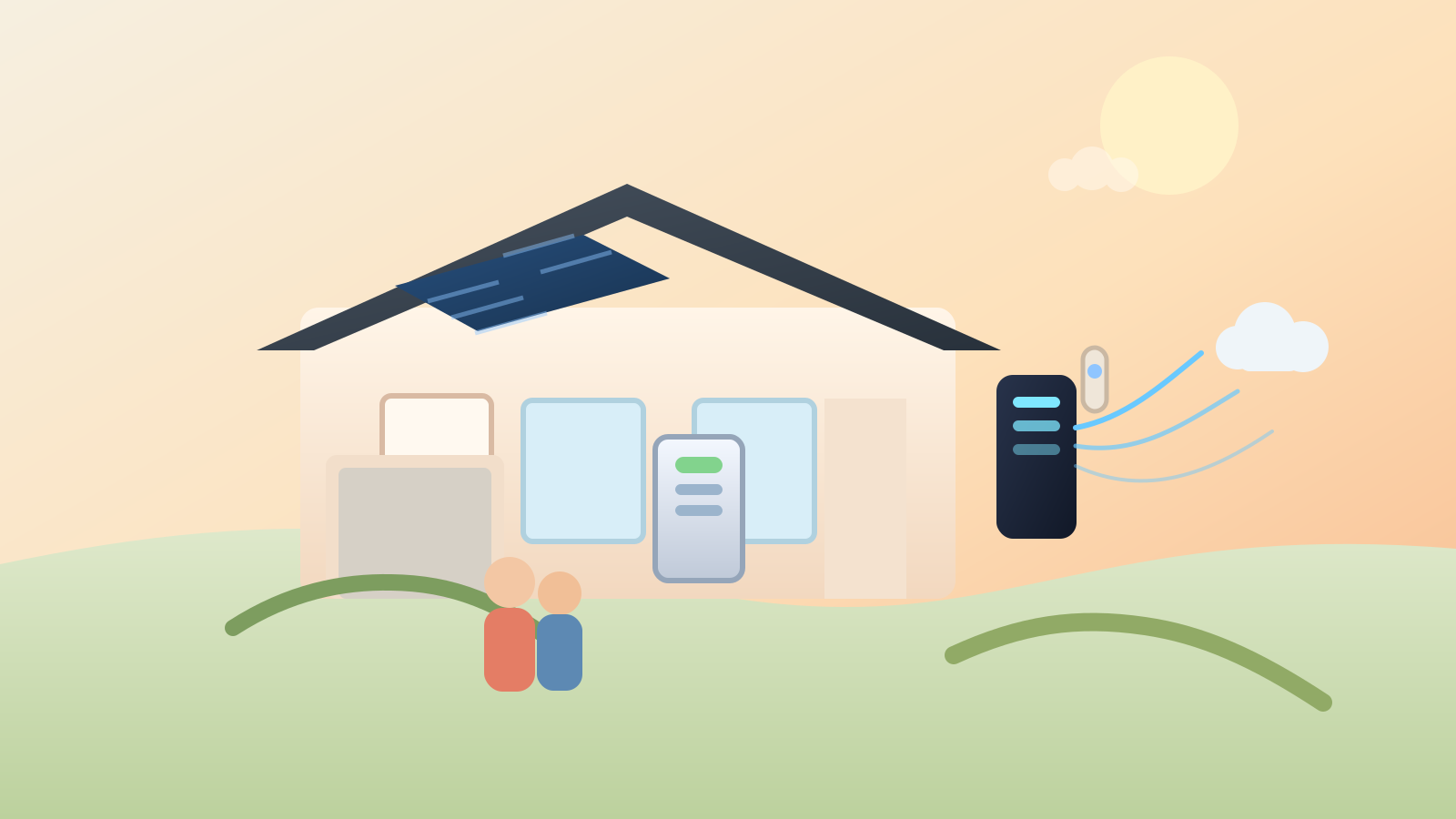
Rooftop solar can make power on your own roof. That can lower how much power you buy during sunny hours. In places like Texas, Florida, Arizona, and Virginia, this can matter a lot. The best plan starts with your bill. Ask how much power your home uses in summer. Ask how much solar you may use right away. Ask what extra solar is worth if it goes back to the grid. Solar is not magic, but it can give your home its own power source during the day.
A battery helps when the sun is down or the grid is out
A battery stores some of your solar power. It can help in two ways. First, it can power part of the home after sunset. Second, it can keep important things on during an outage. Think fridge, lights, internet, fans, medical gear, and a few outlets. Do not assume one battery runs the whole house. Ask for a backed-up load list. Ask how many hours those loads may run. Ask if solar can charge the battery during an outage.
You do not have to go fully off-grid
Most homes should not try to leave the grid completely. Full off-grid living needs a much bigger system, more batteries, careful backup plans, and lifestyle changes. A better goal for many families is less grid dependence. That means using less grid power when prices are high or the grid is stressed. It also means having backup power for the things that matter most. Solar plus battery can help with that goal without pretending the grid no longer matters.
Simple steps before you ask for quotes
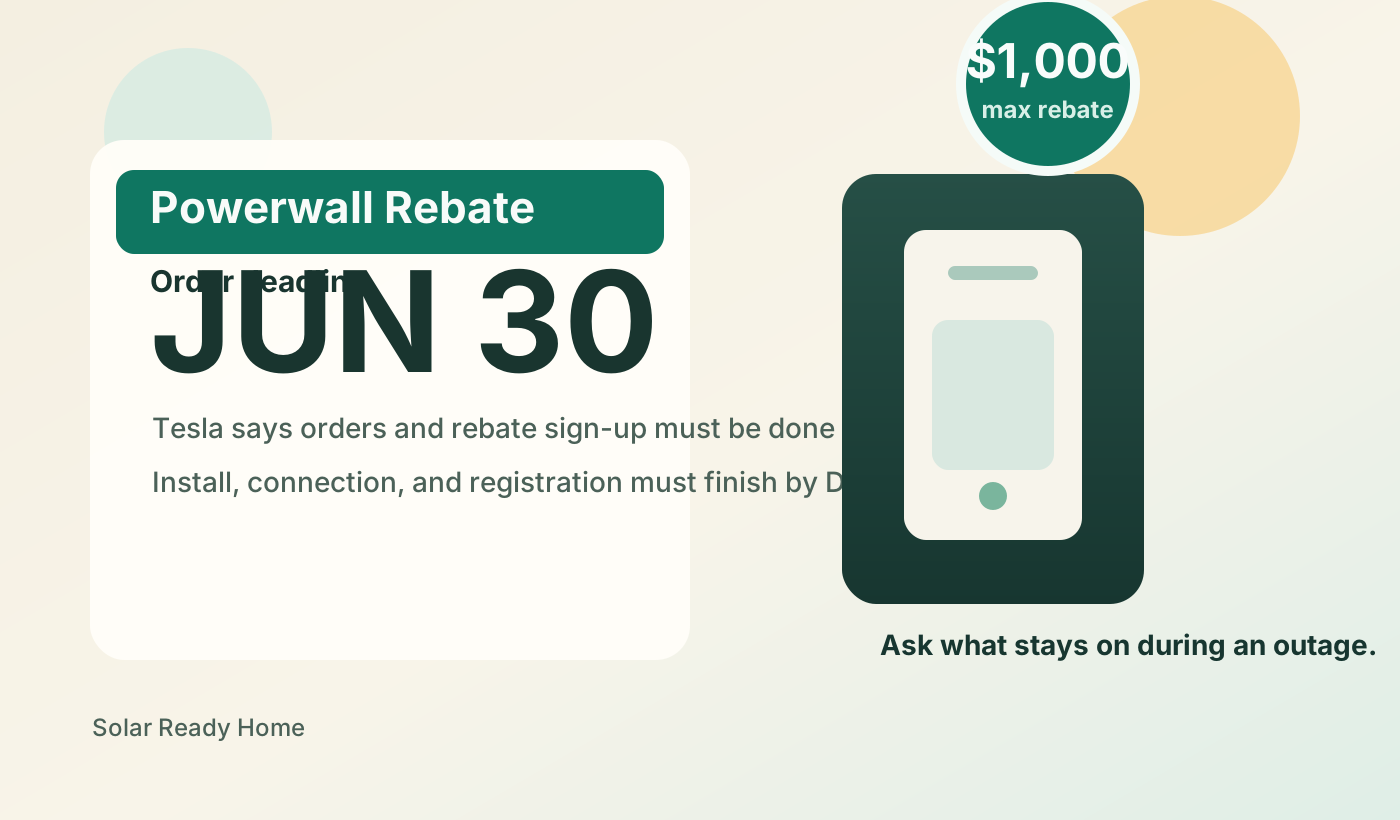
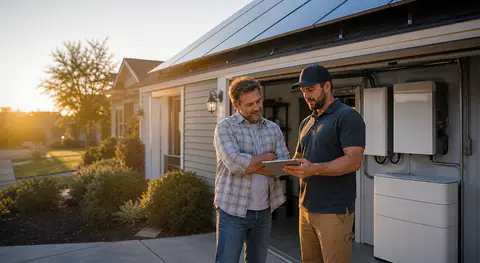
Start with your last twelve power bills. Circle the highest months. Write down what you want to keep on during an outage. Ask for a solar-only quote and a solar-plus-battery quote. Ask for the price with no federal homeowner tax credit for a new 2026 project. Ask what your power company pays for extra solar. Ask if the battery is for bill savings, backup, or both. These questions help you compare real home value, not sales talk.
How homeowners can help the grid too
A home solar battery is mainly for the home, but it can also help the grid in some areas. Some utilities have programs that pay homeowners to share stored power at certain times. Some EVs may also send power back in the future. These programs are not everywhere. Ask your power company if it has a battery program, time-of-use plan, or demand response program. If it does, ask how it affects your backup power. Do not give away the power you need for your own outage plan.