Why this matters now
California has a live plug-in solar bill. It is still moving. Senate Bill 868 passed the Assembly Utilities and Energy Committee in June with no opposition. It now heads to the Appropriations Committee. In plain words, the state is still deciding. This is not a finished right you can count on today. It matters now because many renters and small-home families cannot use full rooftop solar. A small plug-in solar kit costs much less. This bill could open a new path for people who have been left out.
What the bill would change
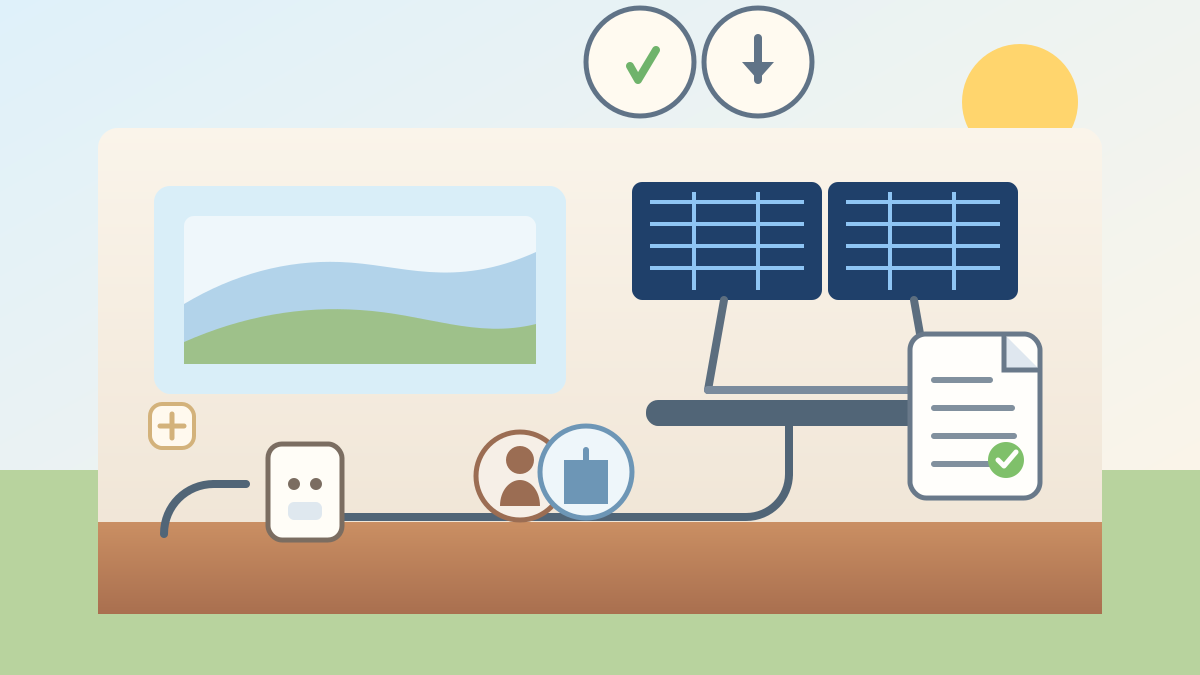
The California bill says a qualifying portable solar device would skip normal interconnection rules. Interconnection is the utility approval process for connecting solar to your home and the grid. The bill also says a utility could not make the customer get approval first. It also could not charge a fee tied to the device. It could not add extra equipment beyond what is already built into the product. The utility could still ask for a simple online form. That form could list the address, make, model, and size. That is much smaller than a full rooftop solar process.
The size and safety limits still matter
This is not unlimited DIY solar. The bill text says the device must stay at or below 1,200 watts for each home. It also must meet the National Electrical Code and California Electrical Code. The bill says it must be certified by Underwriters Laboratories or another recognized testing lab as a plug-in solar system. It also must stop power from backfeeding to the grid during an outage. That matters because line crews do not want live power flowing back while they work. In plain words, only the right small certified product would qualify.
Who this may help and what it will not do
This could help renters, condo owners, and homeowners with the wrong roof for full solar. News coverage says these smaller systems may cost far less than rooftop solar. They may trim part of a high power bill. But families should keep the scale in mind. This is not the same as a big roof system with permits, net metering paperwork, and backup batteries. A small plug-in kit may help with daytime loads. Think internet gear, a small desk setup, or part of the fridge use. It will not turn into whole-home backup. If the lights go out, a plug-in solar panel alone is not the same thing as a home battery.
Why California families should slow down before buying
The bill is still a bill. It is not a signed law yet. Do not buy on the promise alone. Also, the bill is about utility rules, not every building rule. If you rent, check what your lease says about balcony rails, wall mounts, or common-space use. If you own a condo, ask what the HOA allows on the outside of the building. The lesson is simple. Easier utility rules do not erase every housing rule. They remove only one part of the barrier.
Simple homeowner checklist
Ask if the product is certified for plug-in solar use. Ask if it has anti-backfeed protection for outages. Ask for the watt size and whether the total stays at or below 1,200 watts for your home. Ask if the seller is talking about a live California law or only a pending bill. Ask if your landlord, HOA, or building manager has placement rules for balconies, patios, or rail mounts. Ask what appliances the system may really offset on a normal sunny day. Ask if the quote quietly assumes battery backup, export credits, or old homeowner federal tax credits that do not fit a new 2026 project. If the seller cannot answer those questions in short plain words, keep shopping.