Why Virginia families are hearing this now
Big computer buildings called data centers use a lot of power. Virginia has many of them, and more are planned. That has pushed a hard question into public view. Who pays when the grid needs more wires, more stations, and more power to serve that growth? Dominion says rates help cover the cost of serving growing demand. Regulators and lawmakers have also spent the last year arguing about how much of that cost should stay with very large users instead of moving onto families.
What the new rate class really does
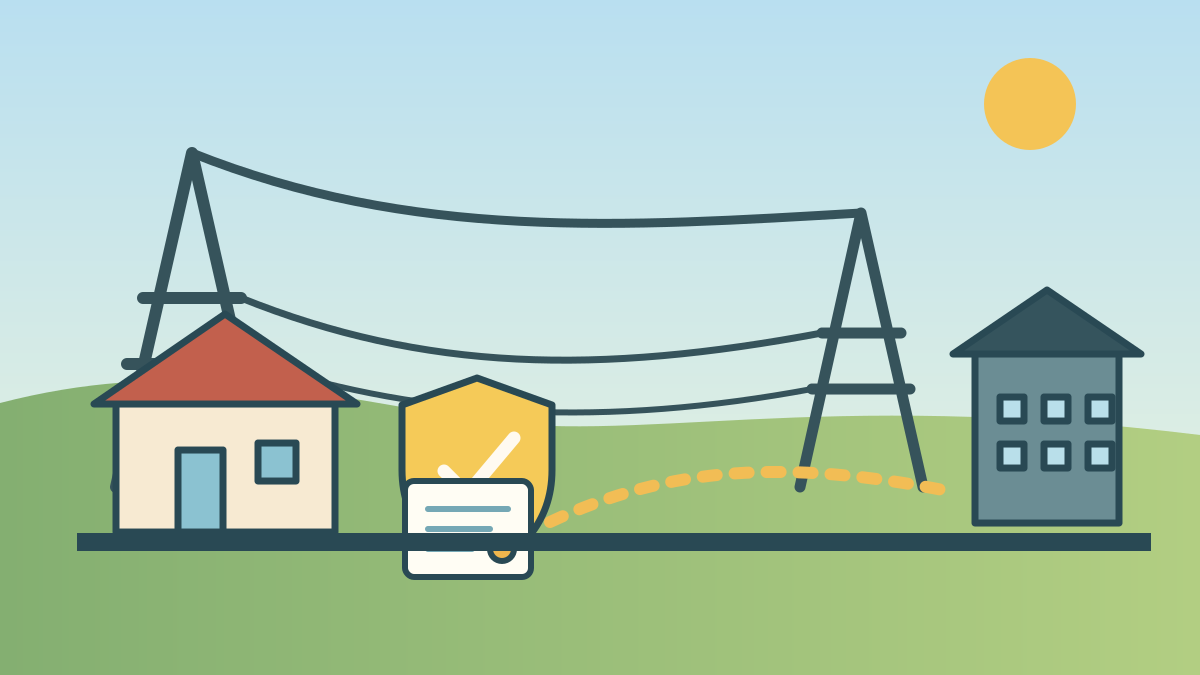
The Virginia State Corporation Commission approved a new class for very large users in November 2025. The rule covers customers that demand 25 megawatts or more. That includes many data centers. The commission also said some of those large users must pay minimum demand charges to help protect other ratepayers if a big project slows down or leaves early. In plain words, the state did not give data centers a free pass. It built a separate bucket for the biggest users and added stronger cost rules.
What it does not promise
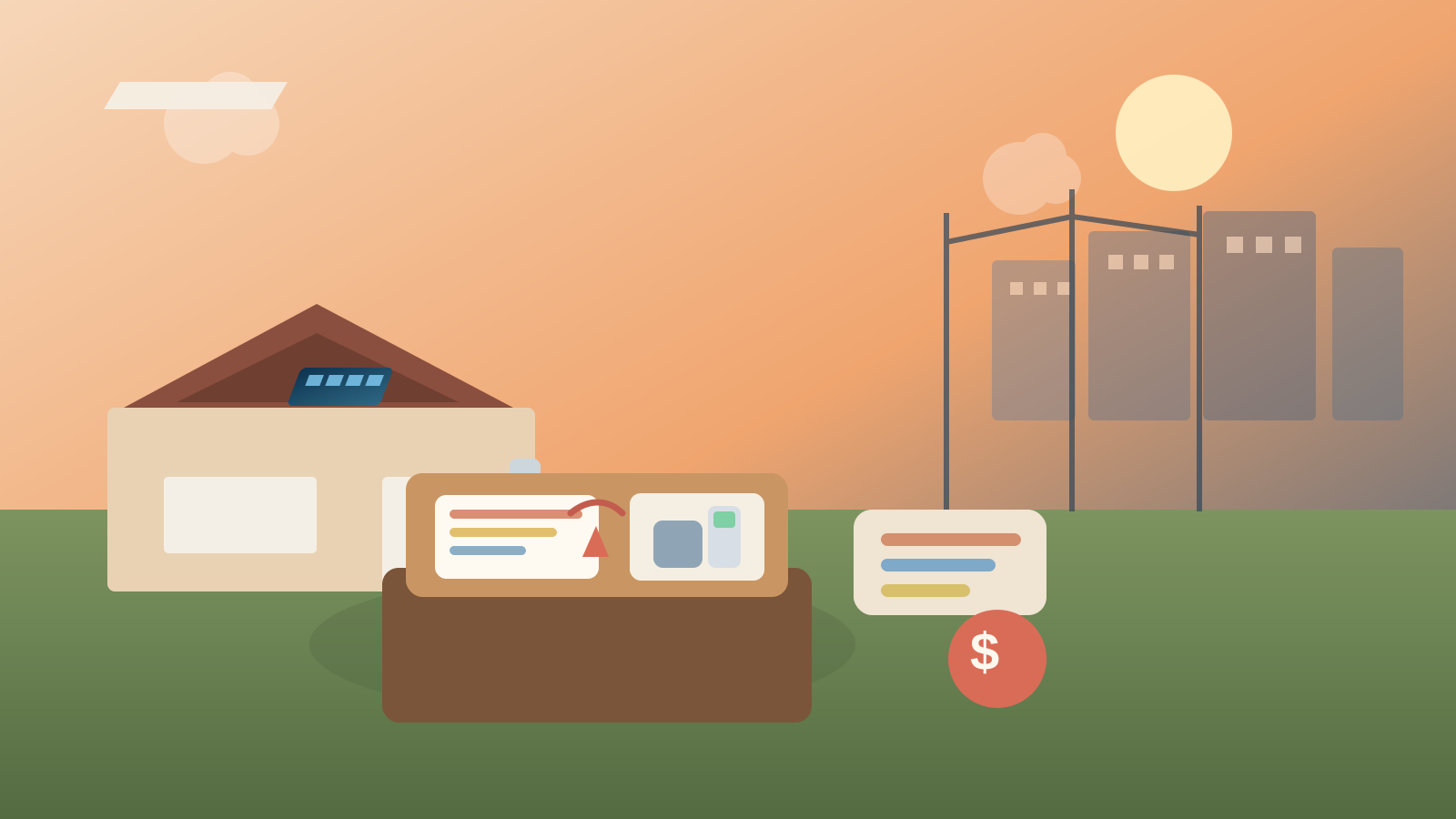
This new class is not a magic shield for homeowners. The same SCC order still approved higher residential rates for 2026 and 2027, just not as high as Dominion first asked for. A typical home using 1,000 kilowatt-hours a month was approved for about $11.24 more per month in 2026 and another $2.36 in 2027. VPM also noted that some grid costs still land on customer bills even when regulators move them around. So the simple lesson is this. The new class may help limit some risk, but it does not freeze your monthly bill.
Why the bill story is still moving
This story is still active because the grid is still under pressure. On June 18, 2026, FERC said it wants grid operators to address new large loads while protecting families and small businesses from paying for upgrades needed by huge customers. In Virginia, lawmakers also tried to push more data-center-related infrastructure costs onto high-energy-use facilities. At the same time, Dominion's own rate page says customer rates help support projects needed for ever-growing demand. That means homeowners should expect this cost fight to keep going, not disappear.
What solar and batteries can do for one home
Rooftop solar will not fix Virginia's whole data center problem. A home battery will not stop every future rate change either. But solar can help a home make some of its own power in the day. A battery can save some of that power for later or for an outage. That matters most if you want to buy less power during expensive times or keep key things on when the grid fails. Think fridge, lights, internet, fans, and medical gear. Ask for a quote that shows bill savings and outage backup as two separate jobs.
Simple homeowner checklist
Pull out your last twelve power bills and find your high-use months. Check your monthly kilowatt-hour use, because the Virginia bill examples use 1,000 kilowatt-hours. Ask each installer for a solar-only price and a solar-plus-battery price. Ask what stays on during an outage and for how many hours. Ask who handles Dominion net metering and interconnection paperwork. For a new 2026 project, ask for pricing with no federal homeowner tax credit assumption. If the seller cannot explain the bill math, the backup plan, and the utility steps in plain words, keep shopping.
Sources
- Virginia SCC order on Dominion's large-user rate class
- Virginia SCC hearing notice on Dominion rate request
- VPM on approved Dominion bill increases
- VPM on proposed shifts of data-center-related grid costs
- Dominion Energy Virginia rate overview
- FERC June 18, 2026 large-load and grid action fact sheet
- WHRO on Virginia bill debate around data centers