Why this matters right now
Virginia families keep hearing that home batteries may earn money by helping the grid. That idea is real. But the timing matters. Dominion's public virtual power plant page still shows an August 2026 ramp-up for launch, subject to approval. Then Dominion's newer webinar transcript adds a more careful line. It says new virtual power plant programs will launch in Q4 of 2026 through Q1 of 2027, after another filing step in November 2026. In plain words, a homeowner should not shop for a battery as if summer 2026 pay is already here.
What a virtual power plant means at home
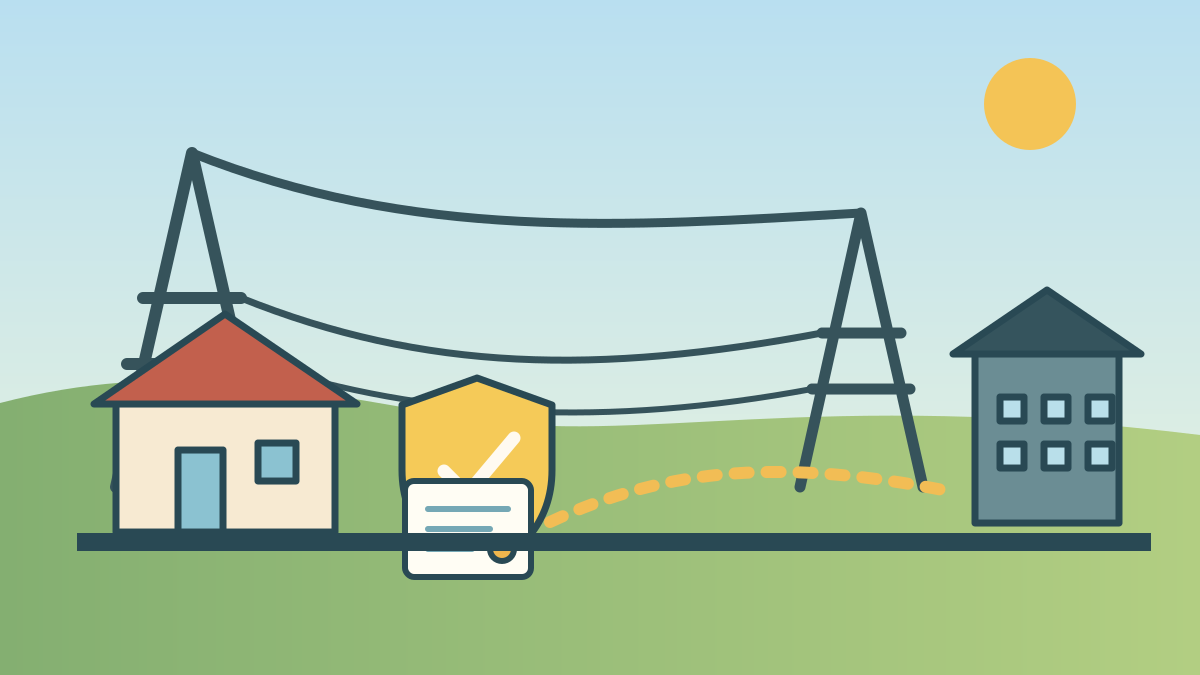
A virtual power plant is a group of small home devices that can help the wider grid for short periods. That can include a home battery, a smart thermostat, or an EV charger. The device stays at your house. You still use it. But the power company may ask it to help during hard grid hours. Dominion says these devices can support reliability in the neighborhood when demand is high. The simple homeowner question is not whether the grid likes this idea. The simple question is what your house gives up, what stays on during an outage, and what you are really paid.
The new timeline changed the buyer risk
This is the fresh angle for July 2026. Dominion's webinar transcript says a tariff or tariff change must be filed by November 15, 2026. It then says new virtual power plant programs will launch in Q4 of 2026 through Q1 of 2027, subject to State Corporation Commission approval. That is later than the simple summer feeling many buyers may have heard before. So if an installer uses battery pay to make the monthly math work today, stop and ask for the same quote with zero virtual power plant income. If the battery only works on paper when future grid pay is added, that is not a safe homeowner plan.
Why Virginia utilities care so much
The bigger grid story is also moving fast. EIA says commercial electricity sales in Virginia jumped by nearly 30.0 million megawatt-hours between 2019 and 2025, with growth largely driven by data centers. EIA also says summer peak load in PJM's Dominion zone hit 23,905 megawatts in 2025, which was 23 percent higher than in 2019. A megawatt is just a big unit of power. The point is simple. Virginia utilities want more flexible tools because demand is climbing. That helps explain why batteries, smart thermostats, and EV chargers keep coming up in homeowner sales talks.
What the Virginia law actually asked for
Virginia's HB 2346 did not promise instant homeowner battery cash. The state bill says Dominion must propose a pilot and that the pilot must evaluate grid capacity needs and whether virtual power plants can provide grid services during peak demand. That means the state asked for a test with real rules and real results. A pilot is not the same thing as a mature, always-open homeowner program. So treat any 2026 battery payment promise as unproven until the final program terms, device rules, and payment details are public.
What to ask before you sign
Ask for one quote with no virtual power plant income at all. Ask for another only if the installer can show the live program rules in writing. Ask what the battery will power during an outage and for how many hours. Ask if you can keep backup power for your family when the grid asks for help. Ask who handles Dominion approval and future enrollment paperwork. Ask if your battery brand, inverter, EV charger, or thermostat is actually eligible today. Then ask for the final monthly cost, the expected power bill, and every assumption on separate lines.
Simple homeowner checklist
Do not count summer 2026 battery pay as guaranteed. Ask for battery math that works without future grid payments. Ask what stays on during an outage. Ask if you can set backup reserve for your family. Ask when Dominion expects real homeowner enrollment to open for your device type. Ask for the exact utility approval steps. Ask for one clean page with system cost, battery size, expected bill, and no guessed virtual power plant income mixed into the savings.