Virginia may get more battery offers
Virginia changed its law in 2025. The law tells big utilities to build a virtual power plant pilot. A virtual power plant is a group of home batteries that can work together. The law says each Phase II utility pilot can reach up to 450 megawatts. It also says utilities must propose at least 15 megawatts of help for residential battery buyers. For homeowners, this means more battery offers may show up. It does not mean every program is live today. Ask if the offer is active now, waiting on approval, or only planned.
A battery program is not the same as backup
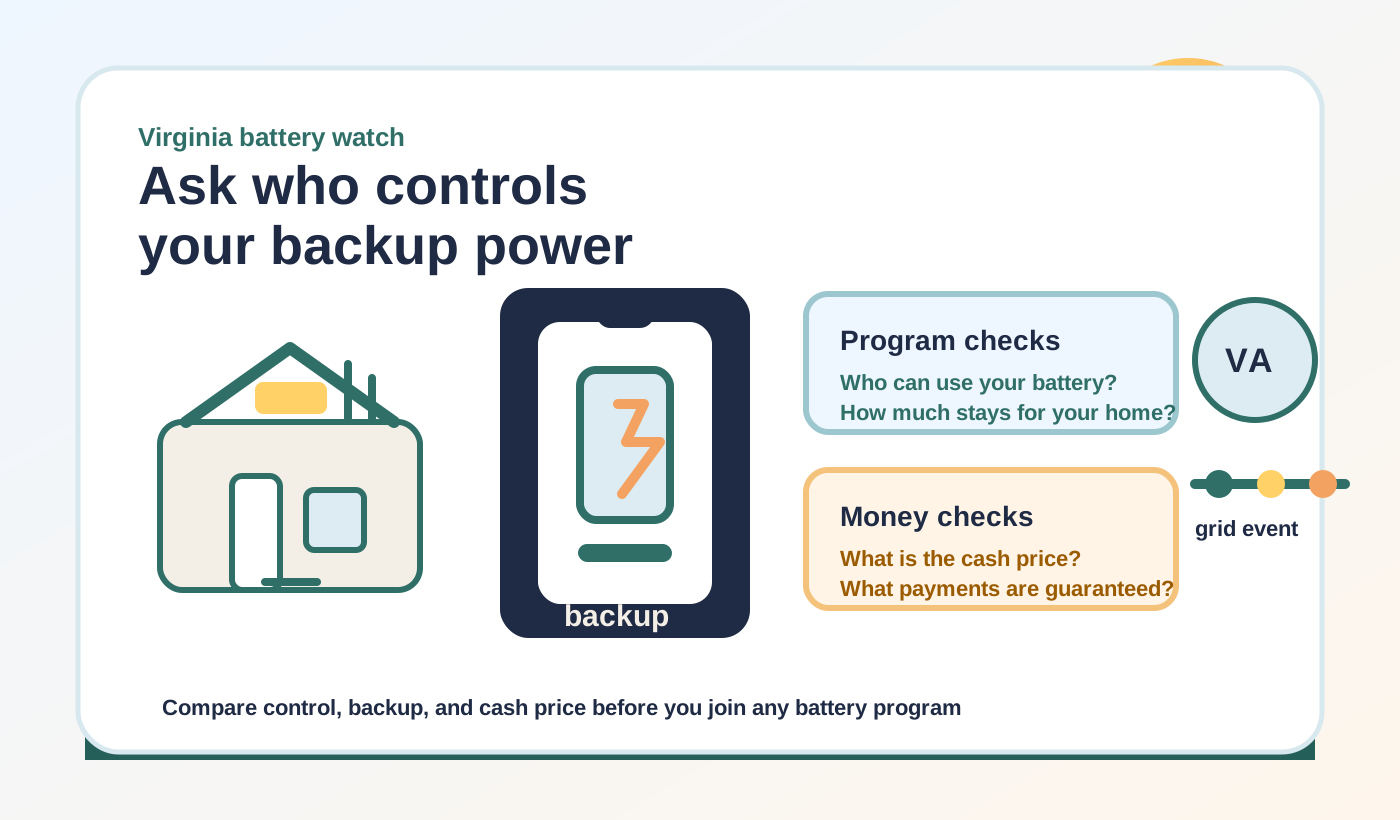
A battery can help your bill. It can also help during an outage. A utility program adds one more job. The battery may send power when the grid is busy. Tesla's GVEC virtual power plant page shows how some programs pay homeowners when stored power is shared. That can be useful. But backup comes first for many families. Ask how much battery power is held back for your home. Ask what happens during a storm watch, outage, or long hot evening.
Ask who can control the battery
Some programs are run by the utility. Some are run by an outside company. The law says homeowners may enroll directly or through an aggregator. An aggregator is a company that groups many small batteries together. Ask who turns the battery on for grid events. Ask how many events can happen each year. Ask how long each event can last. Ask if you can say no to an event. Ask if leaving the program costs money.
Do the price math without old tax-credit hopes
A battery offer can sound cheap when too many discounts are stacked together. Keep the math simple. The IRS says the federal Residential Clean Energy Credit is not available for property placed in service after December 31, 2025. For a new 2026 home project, ask for the cash price with no federal homeowner tax credit. Then ask if the Virginia battery program payment is guaranteed or only estimated. This helps you compare a real price with a real benefit.
Start with your outage list
The U.S. Department of Energy says solar plus storage can help keep key home loads on. Key loads are the things you care about most. Think fridge, lights, internet, fans, medical gear, and maybe one small cooling plan. Write that list down before you ask for quotes. Then ask how many hours the battery may run those items. A big battery name is not enough. The quote should show the backed-up load list in plain words.
Best next step for Virginia shoppers
Ask for three versions of the quote. Ask for solar only. Ask for solar plus battery with no program. Ask for solar plus battery with the program, if one is live. Then compare what changes. Does the monthly bill change? Does the backup list change? Does the battery stay under your control? Does the contract say when payments start? Clear answers matter more than a shiny app. If the battery job is not clear, keep shopping.