Why this matters now
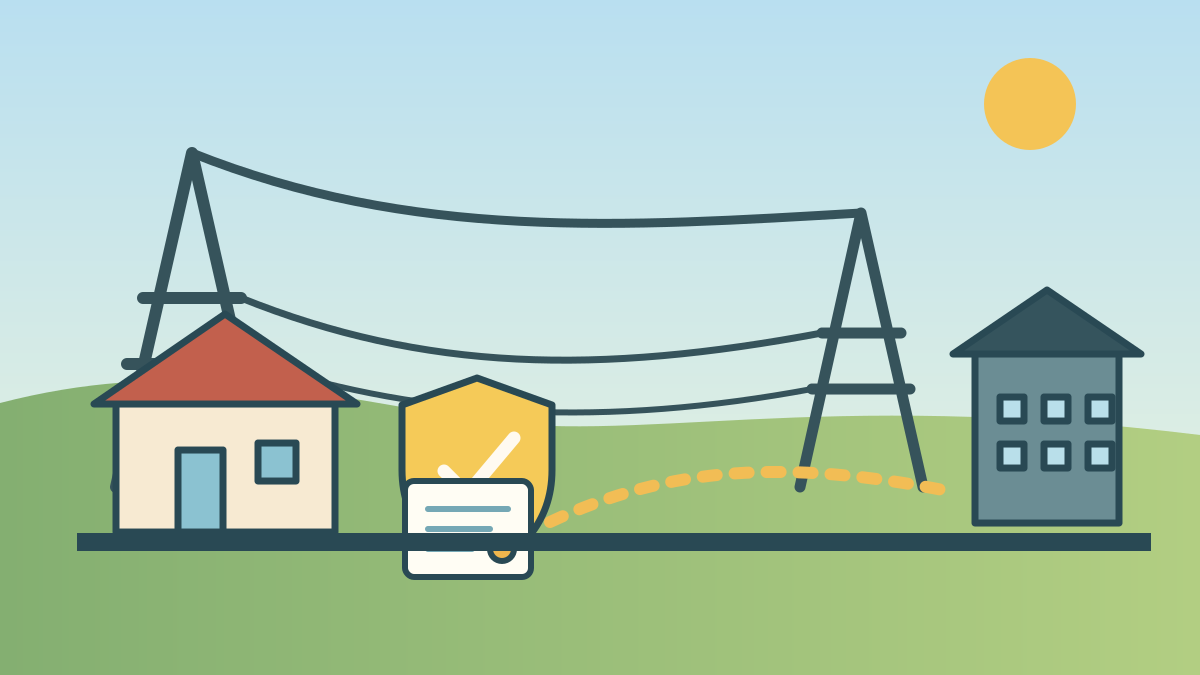
Virginia has many large data centers. They use a lot of power. That can mean new power lines, new substations, and other grid work. Someone has to pay for that work. The Virginia State Corporation Commission is looking at how costs should be shared. The current debate is about transmission lines. Think of them as big power highways. The question is simple. If a line would not be needed without a data center, should the data center pay more of the cost?
What the state is already doing
Virginia already has some safeguards for very large power users. The State Corporation Commission created a separate rate class for the biggest users, including data centers. The commission says these customers must pay minimum charges for much of the power grid work built to serve them. New large users also face long contract terms and may need to show money up front. These rules are meant to lower the chance that a family pays for a big customer that later uses less power than promised.
The new fight over power highways
A July filing from the Governor's office asked regulators to use a simple cause test. In plain words, ask if the line would exist without the data center. If the answer is no, the filing says that cost should go to the large customer, not regular homes. The Governor's office also supported an up-front payment for those special projects. The commission, not a solar company, decides this. Do not treat the filing as a finished discount on your next bill. It is a cost rule being weighed by the regulator.
What this means for solar and batteries
A data center cost rule does not change how your solar panels work. It does not add backup power. It does not promise a new solar rebate. But rising grid costs are one reason families ask more questions about using their own solar power. A battery may help a home use daytime solar later or keep selected loads on in an outage. The value still depends on your home, your power company plan, and the full installed price. Do not buy a battery just because of one news story about data centers.
What to watch on your power bill
Virginia transmission costs can appear as a separate part of a power bill. Watch for new riders, delivery charges, or notices from your power company. A rider is a special charge outside the basic energy price. When a rate change is proposed, look for the typical monthly bill example. It should say how much a home using a set amount of power may pay. Then compare it with your own use. Hot summer homes, electric heat, and EV charging can use more than the example. A small rate change can feel bigger in a high-use month.
Simple homeowner checklist
Ask your power company which part of your bill pays for delivery and transmission. Save rate-change notices so you can compare them later. Ask an installer to show solar savings using your real bill, not a guess about future rates. Ask what a battery would keep on during an outage. Ask if the quote still works without a utility program or grid-pay money. Ask whether your home needs panel work before adding solar, a battery, or an EV charger. Ask for the full price without an old homeowner federal tax credit added to a new 2026 project. If someone says data centers make solar a sure deal, ask them to show the math in writing.