What changed on June 24
A new home battery story landed on June 24, 2026. Sunrun said it is teaming up with Tesla and Renew Home to offer more than 16.8 gigawatts of flexible home power to utilities and large new power users over time. In plain words, that means companies think home batteries, smart thermostats, and other small devices can help the grid when power demand gets tight. This is not the same as a family buying solar just to cut one power bill. It is a new pitch that says your home gear can also act like a tiny part of a larger power plant.
What a virtual power plant means
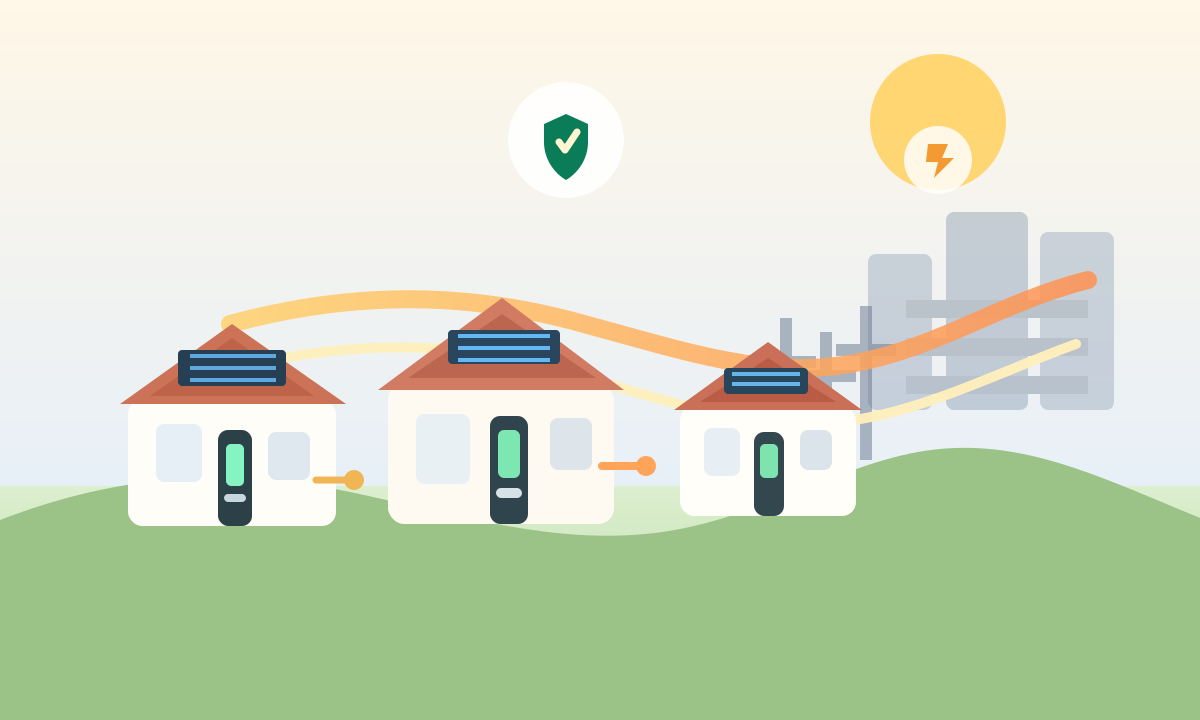
A virtual power plant is a group of home batteries, thermostats, and other devices that can be guided together for short periods. The U.S. Department of Energy says these projects can lower peak demand and help the grid stay balanced. Tesla already has virtual power plant support pages for homeowner programs in several places. That makes the June 24 announcement more than a one-day headline. The basic idea is simple. Your battery charges when power is easier to get. Then some of that stored power may be sent out, or your home may use less grid power, when the grid is under stress.
Why this links to AI and big new loads
The reason this matters now is growing power demand. Sunrun's release says the new effort is meant to help utilities and hyperscalers. Hyperscalers are very large computing companies, including big AI data center operators. EIA said in January 2026 that U.S. power demand is in its strongest four-year growth run since 2000, helped by large computing sites. That does not mean your house is suddenly in danger tomorrow. It does mean utilities are looking harder at fast ways to reduce evening strain. Home batteries are now being sold as one of those tools.
Backup power still comes first
A family should not treat this like free money. A battery that helps the grid can still be the wrong battery for your house. Ask what reserve setting you control. Ask what stays on in an outage. Ask if the program can pull battery power on a very hot night before a storm or local outage. Ask how often events happen and how long they last. Ask if your power company has to approve the setup first. If the seller cannot explain those answers in plain words, the battery plan is not ready yet.
Simple checklist before you sign
Ask if there is a live program in your zip code today, not just a future plan. Ask who sends the event signals and who can change your backup reserve. Ask how you get paid, when you get paid, and what happens if your internet goes down. Ask for one savings case for bill help and one outage case for backup help. Ask if the quote needs a utility approval step and who owns that paperwork. Ask for the full 2026 cash price with no federal homeowner tax credit. The IRS says the Residential Clean Energy Credit is not available for property placed in service after December 31, 2025. Keep your questions short. If the answers are long, fuzzy, or full of buzzwords, keep shopping.