Why this matters now
Riverside Public Utilities approved a new $5 million rebate program for home batteries. A rebate is money that lowers the cost after you meet the program rules. The city report says a residential customer may receive $500 for each kilowatt-hour of battery storage, up to $10,000. A kilowatt-hour is a simple count of stored power. A household in Riverside's SHARE help program may receive $850 for each kilowatt-hour, up to $17,000. That is a large offer, but it is only for RPU electric customers. It is not a statewide California battery payment.
The rate plan is part of the deal
The RPU report says rebate customers must be on the Domestic Time-of-Use rate. Time-of-use means the price of power changes by the time of day. Late afternoon and evening power can cost more. A battery may store power earlier and use it later, but the new rate can also change what you pay when you run air conditioning, cook dinner, or charge a car. Ask RPU for the current price periods before you sign. Ask your installer to show your old bill and the new rate plan side by side. A rebate can lower the battery price, but a poor rate fit can still raise a family's bill.
Do not guess the rebate size
The rebate is based on battery storage size, not a sales promise. The city report says the rebate cannot be more than the project cost and is limited to one rebate per year. It also says there is no equipment-size limit in the program rule. That does not mean a larger battery is always better. A big battery may cost more, need more panel work, and still run only selected home circuits in an outage. Ask what stays on during an outage. Ask how long it may run. Compare a small, useful backup plan with a larger plan before you choose.
Solar can be old or new
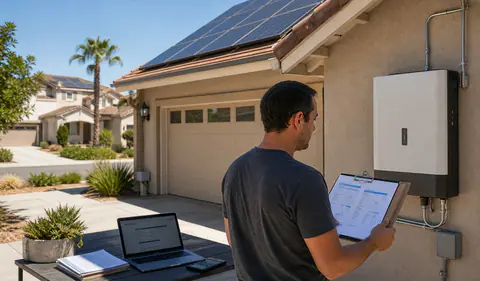
Riverside's program is for energy storage systems. A battery may be added with new solar, added to an older solar home, or planned on its own if RPU's final program rules allow the job. Do not assume your current solar equipment will connect without changes. Your installer should check the inverter, electrical panel, and backup controls. A battery does not automatically give whole-home power. Solar panels alone usually turn off in an outage for worker safety. Ask whether the battery and backup hardware will keep key circuits on after the grid goes down.
Approval is still required
A rebate does not replace the normal safety steps. The installer still needs to follow local permit rules. The power company still needs to approve a grid-connected system. That approval is called permission to operate. The U.S. Department of Energy says a solar or battery system must be permitted, inspected, and connected under utility rules before it begins working with the grid. Ask if the rebate requires a reserved slot before work begins. Ask when you should apply. Keep the purchase contract, permit, inspection result, and utility approval together.
Simple homeowner checklist
Confirm that your power bill is from Riverside Public Utilities. Ask if the rebate application is open and if money remains. Ask if your household qualifies for the SHARE amount. Get the time-of-use price periods in writing. Compare your last twelve bills with the proposed plan. Ask what stays on during an outage and for how long. Ask who handles permits and utility approval. Do not count a rebate until RPU confirms your project in writing. Keep solar savings, battery backup value, rate changes, and loan costs on separate lines. Clear numbers help you choose a battery that fits your home.
Sources
- City of Riverside June 2026 announcement of the Residential Energy Storage Rebate Program
- Riverside Public Utilities Energy Storage Rebate Program report with rebate and time-of-use conditions
- Riverside Public Utilities electric rate and interconnection listings
- U.S. Department of Energy on permits, inspections, and utility connection