What Ohio did
Ohio's utility regulator told AEP Ohio to add more safeguards for other customers when very large data centers affect power costs. The Public Utilities Commission of Ohio says the goal is to keep the cost of serving big new loads from moving to homes and small businesses. This builds on a special AEP Ohio data-center rate. A rate is the set of bill rules a power company uses. The new steps include a process for big customers that want to return to the normal power-supply option.
The big customer has its own rules
AEP Ohio says its data-center rate applies to very large new data-center loads. The company says these customers must go through a separate process and meet contract rules before service starts. The Ohio Consumers' Counsel says the tariff makes new large data centers pay for at least 85 percent of promised power use. That rule can last up to 12 years, even if the center uses less. The point is simple. A company should not ask for huge grid work and then leave homes paying when its plan changes.
This is not an instant bill cut
A new rule can protect against some future cost shifts. It does not erase the charges already on your bill. It also does not set your home's solar credit, electric supply price, or delivery charge. Your bill can still change for many reasons. Power supply, poles and wires, storm repair, and state-approved programs can all matter. Be careful with a solar sales pitch that says data centers make solar pay for itself right now. Ask the seller to use your real bill and the current AEP Ohio rules.
Solar is still home-by-home
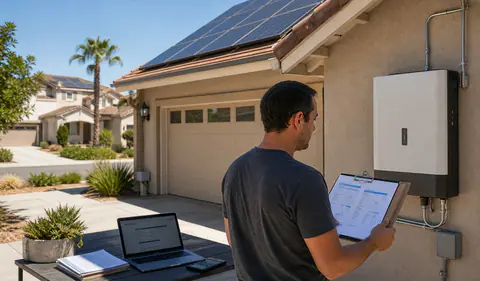
Solar makes power at your house when the sun is out. It may lower the power you buy then. A battery can save some solar power for later and can provide backup power if the system is built for it. Neither one changes a public utility case by itself. The best solar plan starts with your own roof, shade, power use, and utility approval. Ask for the difference between a bill-saving plan and an outage-backup plan. They can be the same system, but they do not have to be.
Read the bill before you buy
The Ohio Consumers' Counsel says bill parts can be confusing. Start with a full year of bills. Write down your total kilowatt-hours and the parts that are power supply, delivery, and other riders. A kilowatt-hour is the small unit of power on your bill. Then ask a full-service installer which parts of the bill their solar estimate expects to lower. Ask what rate and export-credit rule they used. Do not let them combine possible future policy savings with proven solar savings in one number.
Simple homeowner checklist
Keep 12 months of AEP Ohio bills. Check the source of your power supply before changing anything. Ask a solar company to show its estimate using your real use. Ask which bill charges solar will not change. Ask what happens after sunset and what stays on during an outage. Check the utility approval steps before buying equipment. For a new 2026 project, do not add an old federal homeowner tax credit unless a current official source proves it applies to your project.