Why this matters now
Summer battery programs are live again in New England. Mass Save says battery owners can get paid when the grid is under stress on hot days. Tesla says its Powerwall program can call on a battery up to 60 times between June 1 and September 30. The U.S. Department of Energy says these battery groups can help with rising power demand and high-cost peak hours. For a homeowner, that turns a battery into two questions. Will it help during an outage, and can it also send some power out for cash?
What this program really is
ConnectedSolutions is a summer battery program. A utility or battery company sends a signal during busy grid hours. Your battery then helps by sending out power or by cutting what your home takes from the grid. A virtual power plant is just a big group of home batteries working together. It is not a new box on your wall. It is a rule set for how your battery is used on certain days.
What the money may look like
Mass Save says residents can receive $275 per kilowatt for a battery's average help during summer events. The page gives a simple example too. A battery that can give 5 kilowatts during events could bring in up to $1,375 per year. Tesla uses a different homeowner example. Tesla says some Powerwall owners may earn up to nearly $800 per battery each year, depending on size, utility area, and how the battery performs. These numbers are not the same as a rebate at checkout. They are based on what the battery actually does during the season.
Backup power still comes first
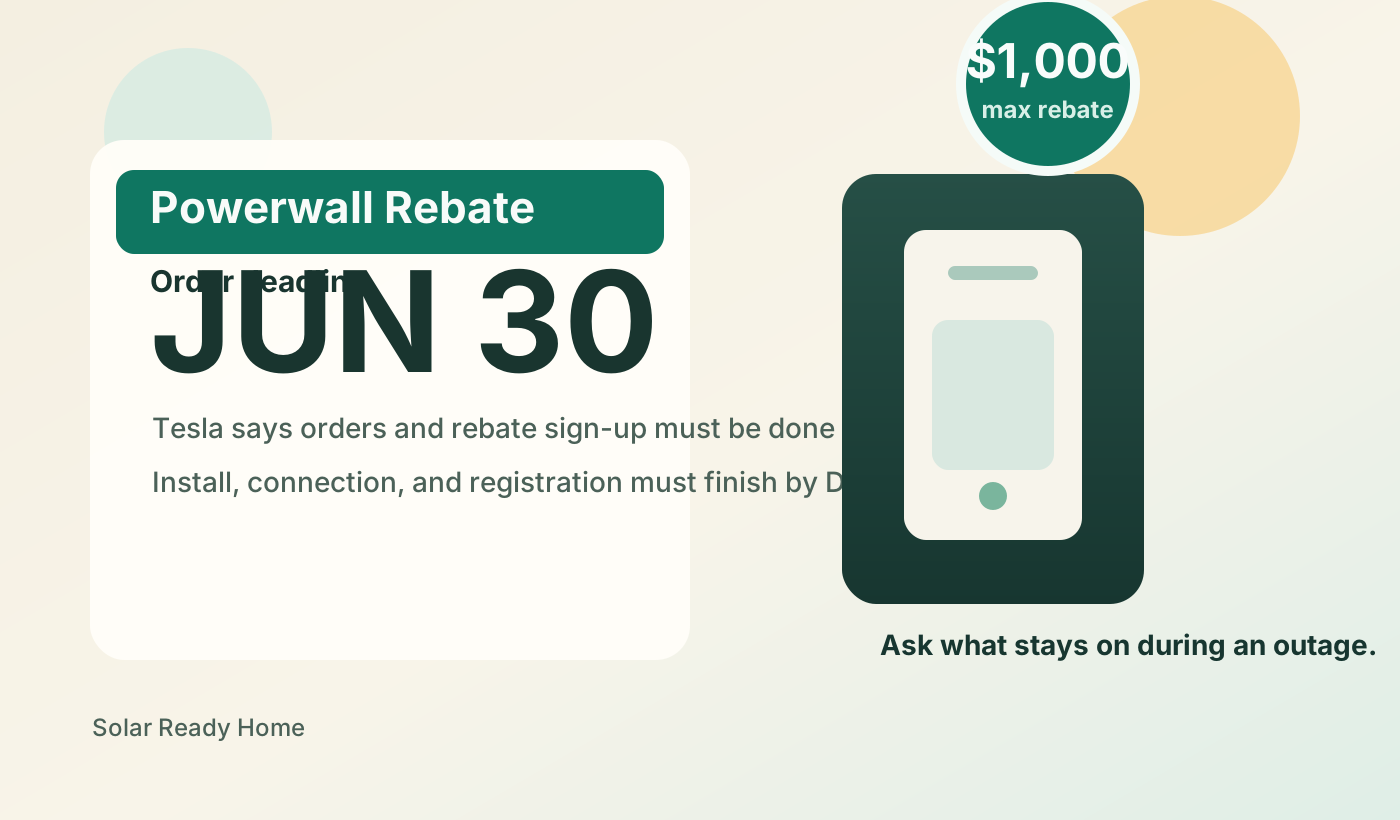
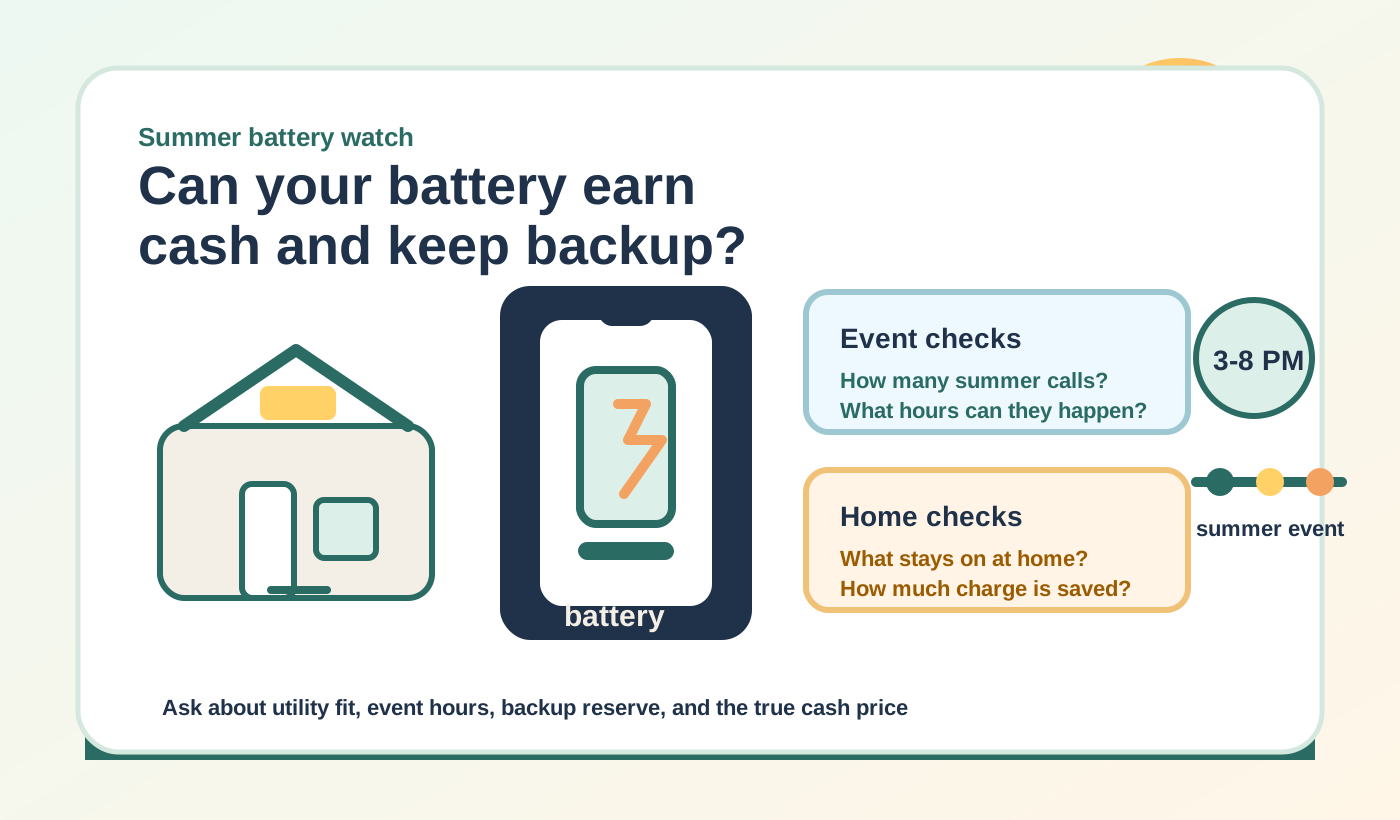
Do not join just because the payment sounds nice. Ask what stays on during an outage. Ask how much battery charge is held back for your house before a summer event starts. Tesla says owners can join with or without solar, but the battery still needs the right settings for your comfort level. If you want the fridge, lights, internet, and a medical device to stay on, get that list in writing. A few hundred dollars is not worth a bad surprise in a blackout.
Who can join
Mass Save says eligible homes must be customers of Cape Light Compact, Eversource, or National Grid in Massachusetts. The battery must be paired with a qualifying inverter, and the list includes brands such as Enphase, FranklinWH, Generac, Qcells, Sol-Ark, SolarEdge, Sunnova, and Tesla. Tesla's own page adds Rhode Island Energy in Rhode Island and Eversource in New Hampshire for its Powerwall path. That means your zip code and battery brand both matter. Do not assume your home is in the program until the installer shows the utility match.
Watch old sales math
Start with the cash price of the battery. Then look at program pay. Do not let a sales sheet blend summer event money with old homeowner tax-credit math. The IRS says the Residential Clean Energy Credit is not available for new homeowner systems placed in service after December 31, 2025. In 2026, that makes clean pricing even more important. Ask for one line that shows the install price and another line that shows possible yearly program pay.
Your next-step checklist
Ask if your utility area is on the approved list. Ask which battery brand and inverter are approved for your address. Ask how many summer events can happen and what hours they may hit. Ask how much backup charge stays saved for your home. Ask who changes the settings if the plan does not fit your family. Ask for the full installed price with no old homeowner tax credit and no guessed savings.