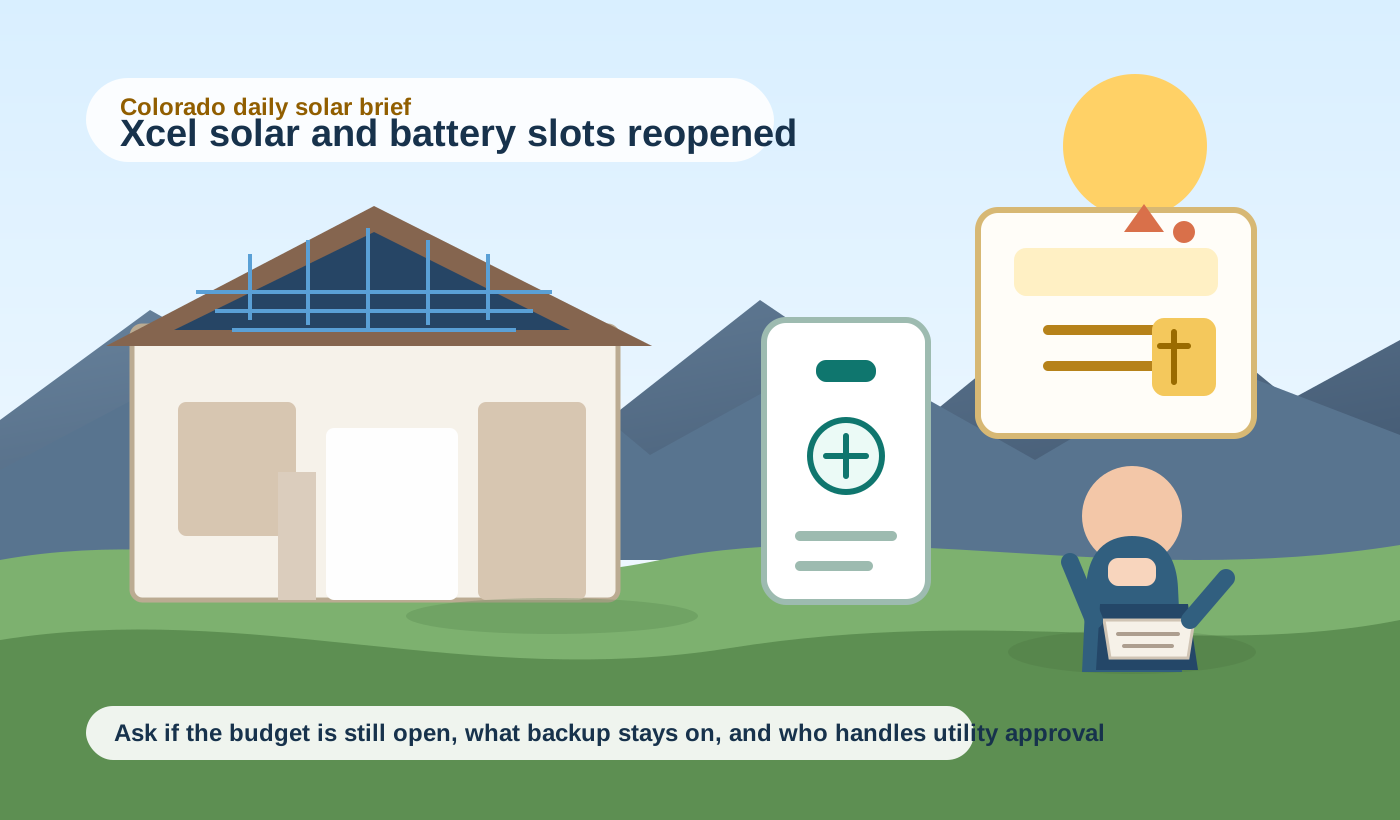
The two official pages do not say the same thing
Colorado families need to slow down here. Xcel's Renewable Battery Connect page still shows how the payment is figured. It says standard qualified residential battery storage incentives can be $250 per kilowatt of max discharge power, up to $5,000 per application. It also shows a much higher track for some income-qualified or disproportionately impacted homes. But Enphase's Colorado program page says the current program is closed to new enrollments and says more 2026 funding is still to be announced. That means a sales claim is not enough. Ask for written proof.
Do not mix battery money with solar money
Battery money and panel money are different. A solar quote can still mention panel help even if the battery side is harder to lock in. Ask for the panel incentive, the battery incentive, and the full installed price on separate lines. This keeps the math easy to check. It also stops a seller from hiding a weak quote inside one big savings bar. For a new 2026 project, ask for the cash price with no old federal homeowner tax-credit assumption.
Written proof matters more than a promise
If an installer says the program is open for your home, ask them to show it in writing. That can be an email from the utility, an approved installer notice, or a current program screen for your address and battery model. Ask when the slot is held, when the application is filed, and what happens if the utility says no. If the answer is only trust us or we will fix it later, keep shopping.
Backup rules still matter
A battery program is not just free money. It can affect how your battery works. Ask how much charge stays saved for outages. Ask what rooms or devices stay on. Ask if the program can call on your battery during hard grid hours and who can change your reserve setting. A full-service installer should explain this in normal words. A careful DIY shopper should still plan on pro help for utility approval, controls, and inspection.
Some homes may still see bigger help
The standard payment is not the only track on Xcel's page. The page also points to bigger help for some households that fit income or community rules. That can change the math a lot. Do not guess. Ask which bucket your address fits today and who proves that fit. Then ask for one quote with the standard case and one quote with the higher-help case. If the seller cannot explain the difference, the quote is not ready.
Simple checklist before you sign
Ask if new enrollments are open for your exact job today. Ask if your battery model is approved. Ask who files interconnection and rebate paperwork. Ask what stays on during an outage and how much reserve stays in the battery. Ask for the full 2026 cash price with no federal homeowner tax credit. The IRS says the Residential Clean Energy Credit is not available for property placed in service after December 31, 2025. If those answers are not short, clear, and written down, keep shopping.