Why this matters right now
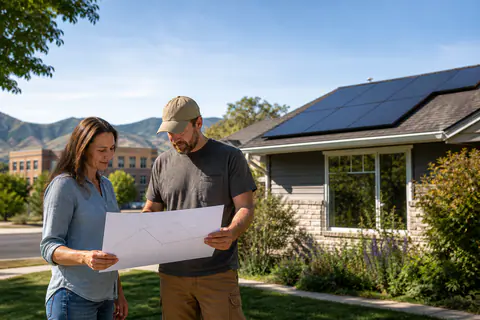
Xcel Energy says its 2026 Renewable Battery Connect program reopened on May 21, 2026 with a renewed incentive budget. That is the fresh part. This is not old marketing copy from last year. It means Colorado homeowners are looking at live battery money again right as summer power demand starts to climb. If you were told the program was full earlier, that answer may now be out of date. Ask your installer to check again before you rule a battery out.
What the program pays
The money is not the same as a simple coupon at checkout. Tesla says participating homes can get an upfront incentive and then $100 each year while they stay in the program. SolarEdge gives the clearest public math for one eligible setup. It says the program pays $500 per kilowatt, which works out to about $2,500 for one battery in its example, plus $100 each year for active participation. Homes in income-qualified or disproportionately impacted community groups may qualify for a bigger upfront amount. A recent pv magazine report on the Colorado PUC plan says that enhanced incentive moved up to $1,000 per kilowatt for those customers.
What Xcel wants from your battery
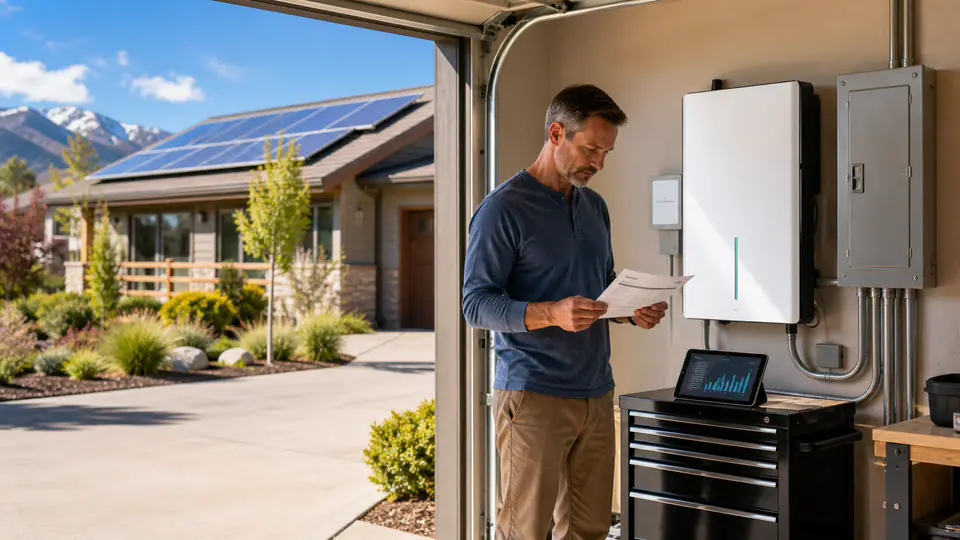
This is the trade. Your battery does not just sit there for your house. During a grid event, the utility can call on part of it. Tesla says its Xcel program keeps a 40 percent backup reserve for the home. SolarEdge says Xcel may use up to 60 percent of battery capacity during event periods, with events lasting up to three hours and happening as many as 60 times a year. In plain words, you still keep some backup power, but not all of it, if your battery is enrolled. That is why you should ask what stays on during an outage before you join.
Who can join and what must be new
This is not for every battery already on a wall. Tesla says you need a residential Xcel Energy Colorado electric account in good standing, a new Powerwall 3 install through a certified installer, and a complete battery interconnection application with the utility. SolarEdge says its path is also for newly installed batteries that are submitted through a new interconnection request. That means utility approval still matters. If your installer is vague about the paperwork, the quote is not ready.
Do not use old 2025 tax math
The IRS says the Residential Clean Energy Credit is not available for property placed in service after December 31, 2025. So for a new 2026 Colorado battery project, ask for the cash price without a federal homeowner credit line. Then look at Xcel program money as a separate line. This keeps the numbers honest. If a sales sheet still shows an old federal credit for a 2026 install, ask for a corrected quote before you compare anything else.
A good quote should answer these simple questions
Ask how much upfront money fits your exact battery size. Ask whether your address falls in a higher-help income-qualified area. Ask who files the interconnection papers and when. Ask how many lights, plugs, cooling loads, or medical devices stay on if Xcel calls an event during a hot week. Ask if there are any penalties if your battery cannot fully perform. SolarEdge says there are no penalties for underperformance in its program FAQ, but you should still get your installer's answer in writing for your own setup.
Your next-step checklist
Ask your installer to confirm the program is still open today. Ask for the battery model, power rating, and expected upfront incentive in writing. Ask for a one-page outage plan that lists what stays on at the 40 percent reserve level. Ask for the full installed price with no old federal credit included. Ask when utility approval will be filed. If the seller cannot answer those five questions clearly, keep shopping.