Why this matters in California now
California solar math changed in 2026. The big reason is simple. A new base charge now shows up on many home power bills each month. PG&E says this Base Services Charge started in March 2026 for residential solar customers on net metering statements. Southern California Edison says solar customers also pay the Base Services Charge, even when they have panels on the roof. In plain words, this is a monthly bill line that does not go away just because your roof makes power in the daytime. That matters to new shoppers and to families who already have solar. It means the bill story is less about getting to zero every month and more about using your solar well.
What the new base charge is
PG&E says the charge covers approved grid and service costs. That includes things like the lines, meters, billing, and support needed to keep a home connected. SDG&E uses similar plain language. It says the base charge covers equipment like transformers and meters and helps make sure power is delivered safely. SCE says the charge is a separate line on the bill and applies to residential customers, including solar customers. The key point for a homeowner is this: part of your bill is now a fixed cost for staying connected. It is not just about how many kilowatt-hours you buy. A kilowatt-hour is simply a unit of power use. Your solar can lower the power you buy. It does not stop the fixed connection cost from showing up.
Why solar still helps, but the bill changed
Solar still lowers the amount of power you need to buy from the grid. That part did not disappear. What changed is the shape of the bill. PG&E says the base charge is not eligible to be offset by monthly generation credits. SCE says solar customers are still required to pay the charge, though lower power-use rates may help when the home is not generating its own power. So solar is still useful, but the goal is different. You want to use more of your own daytime solar in the house. Run the dishwasher in the day if you can. Charge the EV when the roof is making power if your setup allows it. Shift laundry, cooling, or pool pump use when the sun is up. Those habits help because self-use matters more when one part of the bill stays fixed.
What a battery may and may not fix
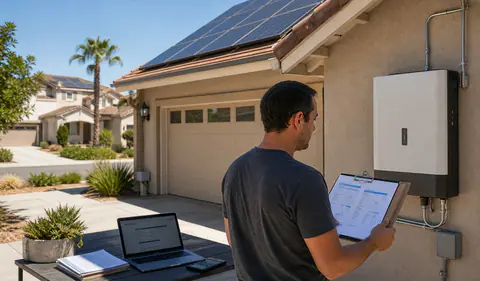
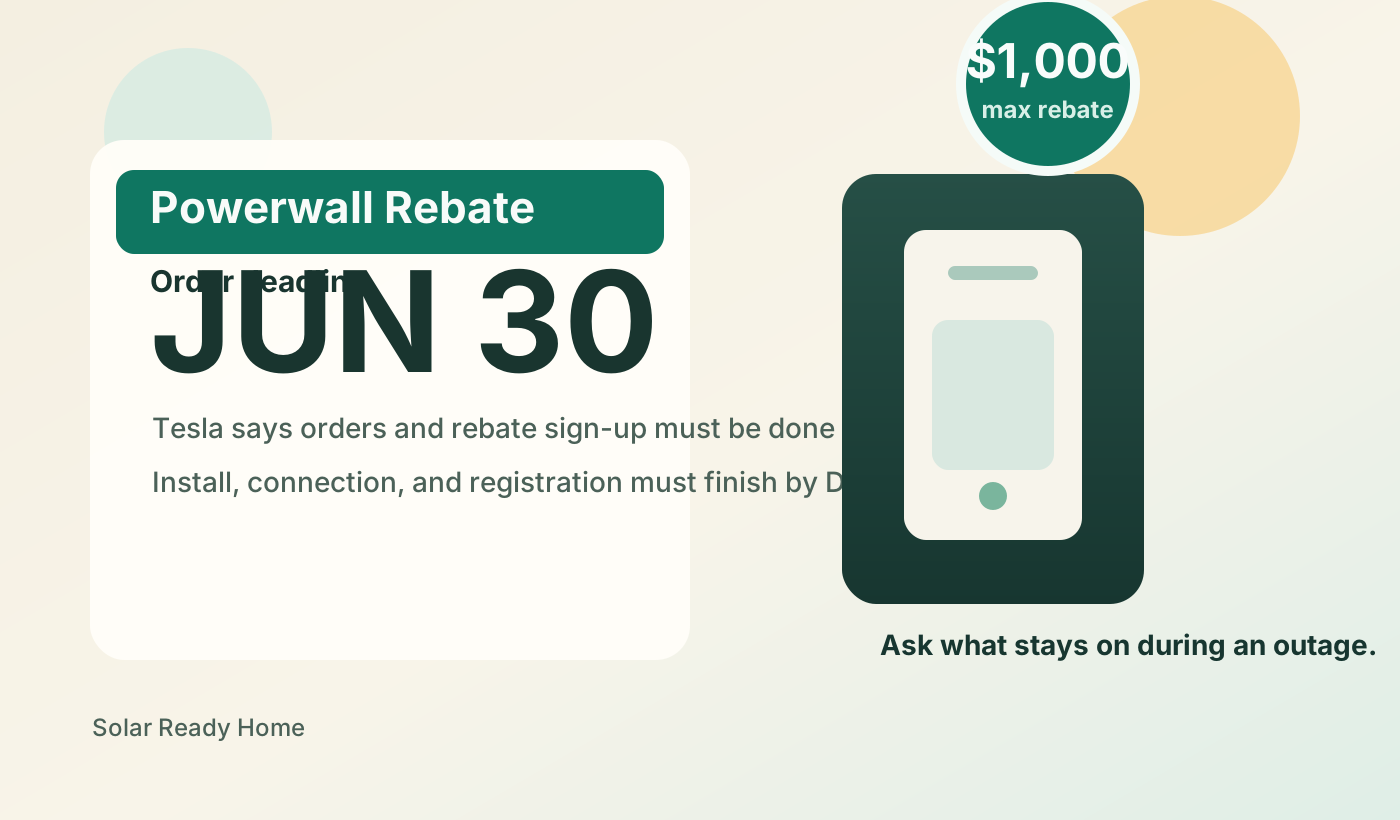
A battery can still help in California. It can save daytime solar power for the evening. That matters because many homes use the most power after sunset. A battery can also help keep some home circuits on during an outage. But a battery is not a magic eraser for the new base charge. The fixed line is still there. The better battery question is not, can this make my bill zero. The better question is, can this lower costly evening grid use and give me backup power that my family will really use. If an installer shows a battery quote, ask what stays on during an outage, how many hours that plan may last, and how much evening grid buying the battery may really cut. Keep the battery story tied to real home use, not wishful math.
What to ask before you sign in 2026
Ask for a bill model that includes the base charge. Ask to see one version with solar only and one version with solar plus battery. Ask which utility rule is being used for your address. Ask how much of your solar power is expected to stay in the house and how much is expected to go out to the grid. Then ask what the bill may still look like in August and in January. This helps you see the whole year, not just one sunny month. If your home qualifies for CARE or FERA, ask about that too. The Public Advocates Office says CARE customers in 2026 may see about a 40 percent total discount when program exemptions and the Base Services Charge changes are included. That does not mean every family gets the same result. It does mean income-based bill help can matter.
Do not let old federal credit math blur the picture
This part is important for any new 2026 project. The IRS says the Residential Clean Energy Credit is not available for property placed in service after December 31, 2025. So if a seller tries to soften the new California bill math with an old homeowner federal credit on a 2026 owned-system quote, the sheet is not clean. Price the project without that old credit. Then look at the real local bill rules, the base charge, and any battery value. Clear math makes it easier to tell if solar still fits your home.
Simple homeowner checklist
Ask to see the base charge on the sample bill. Ask how much of your solar power will be used in the home first. Ask what part of the bill cannot be offset by monthly export credits. Ask if a battery is being sold for outage backup, evening bill control, or both. Ask what stays on during an outage and for how long. Ask if you qualify for CARE or FERA. Ask for one clean sheet with system price, expected bill, base charge, battery value, and no expired homeowner federal credit mixed into the numbers.