Why this matters now
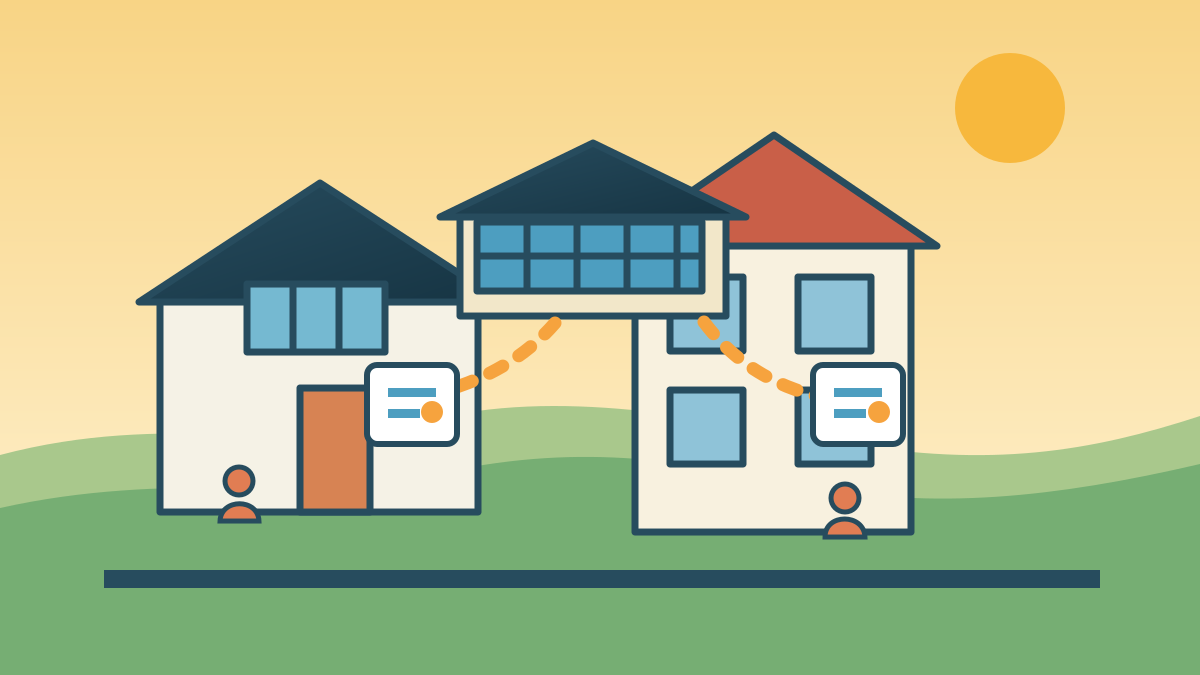
California has finished key rules for its new Community Renewable Energy program. This is shared solar. A solar project sits somewhere else. A customer signs up for a share and may get a bill credit. The state says this can help renters, condo owners, and families with a shaded or worn roof. That makes it different from buying panels for your own house. The power company still sends a bill. You are not getting a home battery or outage backup. You are joining a bill-credit program.
What California just decided
On June 11, 2026, the California Public Utilities Commission said it finalized key implementation details for the Community Renewable Energy program and updated older community solar options too. In plain words, the rules are more real now, but that does not mean every family can sign up today. Utilities and community choice groups still have to roll out the details in their own service areas. Treat this as a real policy move, not as proof that a salesperson already has a live offer for your address.
Who may have the best fit
A renter may be a good fit because there is no roof work. A condo owner may also care because the HOA may not allow rooftop solar. A homeowner with a small, old, or shaded roof may want to look too. But the fit still depends on the actual program. PG&E says its Green Saver program helps some eligible customers who rent, cannot install rooftop solar, or cannot join other solar programs. PG&E also says some customers may get a 20 percent electric bill discount. That is helpful, but it is not the same as a universal offer for every California household.
A bill credit is not a free solar system
The key word is credit. You may get a lower bill because part of the value from a shared solar project is assigned to your account. You do not own panels on your own roof. You do not get backup power during an outage just because you joined. If a pitch starts sounding like free home solar, slow down. Shared solar can be a real tool, but it solves a different problem. It helps some households get cleaner power or a lower bill without roof work. It does not replace asking what your bill still includes each month.
Why families should watch the sales pitch
This kind of program is easy to oversell because the idea sounds simple. A marketer can say solar without roof work, guaranteed savings, or no money down. Families should ask which exact program the offer uses. They should ask who sends the bill credit, whether there is a contract length, whether there is a fee to leave, and whether the credit changes over time. A clean offer should show who runs the program and how the bill math works in short plain words. If the offer hides behind fuzzy words, skip it.
Simple homeowner checklist
Ask if your address is in a place where the program is truly open today. Ask if the offer is from a utility, a community choice group, or a private seller. Ask how much of the bill the credit may really offset. Ask whether there is a contract or cancellation fee. Ask if the plan is only for income-qualified households or certain neighborhoods. Ask what happens if you move. Ask whether there is still a normal utility bill after you join. If the answers are short, clear, and written down, then shared solar may be worth comparing with rooftop solar or just staying on your current plan.