Why solar homes should look twice
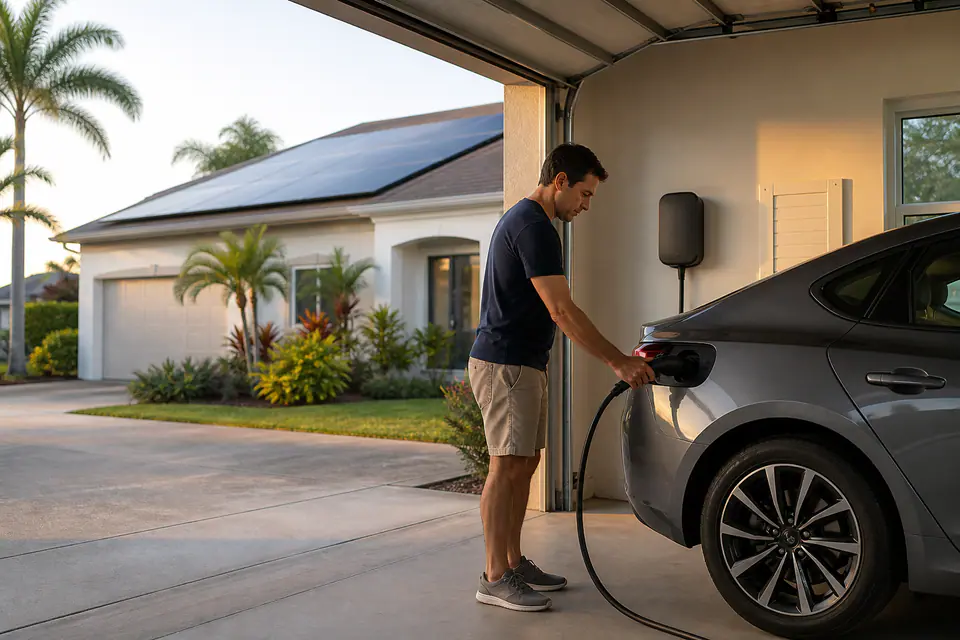
An electric car can use a lot of power. Solar can help when the car charges while the sun is up. But many families charge at night. FPL now offers EVolution Home, a plan with a home charger, installation, and a lower off-peak price for charging. The plan may fit a busy driver. It may not fit every solar home. Your car plan, solar bill credit, and whole-home rate all need to work together. Do not compare only the cheap night price. Compare the full bill.
The price has two parts
For 2026, FPL lists a $36 monthly charge when it does the full charger installation. The equipment-only option is $27 a month. The plan also has power charges. FPL lists 2.016 cents per kilowatt-hour for off-peak charging and 22.583 cents for on-peak charging. Other fuel and bill charges still apply. A low off-peak number can look great. But the fixed monthly charge matters more for a car that does not use much power. Ask for a real example based on your monthly driving.
Time of use is a big choice
FPL says EVolution Home customers cannot also be on its regular Time-of-Use plan. Time of use means the price for the whole home changes by hour. That can matter for a solar family that runs air conditioning, a pool pump, or a battery at certain times. The charger plan has its own off-peak rules. Before you enroll, ask FPL to show the home bill on your current plan and on the charger plan. Ask the solar installer to use those same numbers in the quote.
The term is longer than a car loan
The current program has a 10-year term. FPL says you own the charger at the end. It also says early cancellation can bring a fee plus a $50 administration fee. The fee starts higher for a full installation and goes down over time. Moving can trigger that choice. This does not make the plan bad. It means the plan is more like a long service agreement than a simple charger purchase. Ask what happens if you sell the home, add a second EV, or need a main-panel upgrade.
Solar power and night charging are different jobs
Roof solar makes the most power in the day. Off-peak car charging often happens at night, on weekends, or holidays. A home battery may move some daytime solar into the evening, but it adds cost and has limits. Do not assume the car runs on roof solar just because the house has panels. Look at your energy app for a week. See when the car plugs in and when the panels make power. Then ask if simple daytime charging, a timer, or a battery changes the result.
Simple homeowner checklist
Write down your monthly EV charging use. Ask for the full monthly cost, including the fixed charge and other power charges. Check whether you are willing to stay in a 10-year service plan. Ask what the early-exit fee is today. Ask if the plan blocks your regular Time-of-Use option. Check if your garage has the needed 240-volt circuit. Ask if solar or a battery changes the best charge time. Ask what stays on during an outage, because a car charger is not backup power. Do not add old homeowner federal tax-credit money to a new 2026 solar, battery, or panel-work quote.