Why this matters now
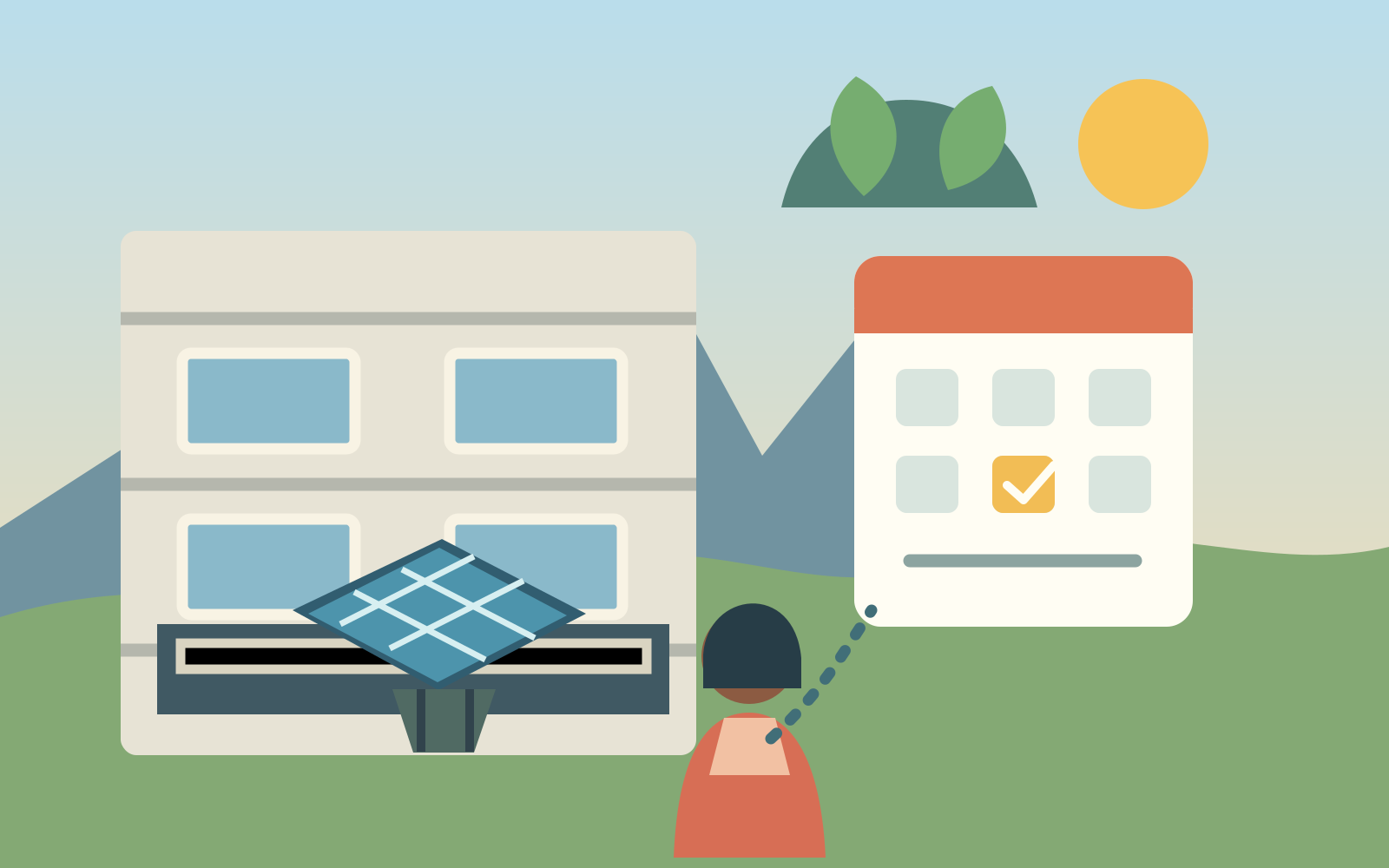
Colorado changed the local permit path for many home solar jobs. Cities with more than 5,000 people and counties with more than 5,000 people in their unincorporated areas were required to set up an automated permit tool by July 1, 2026. A permit is the local government's safety approval for the work plan. The new tool can check a standard plan quickly. That may mean less waiting before the roof work starts. It does not mean every home gets an instant yes. It also does not mean you can switch on solar as soon as the panels are attached.
Which homes may fit
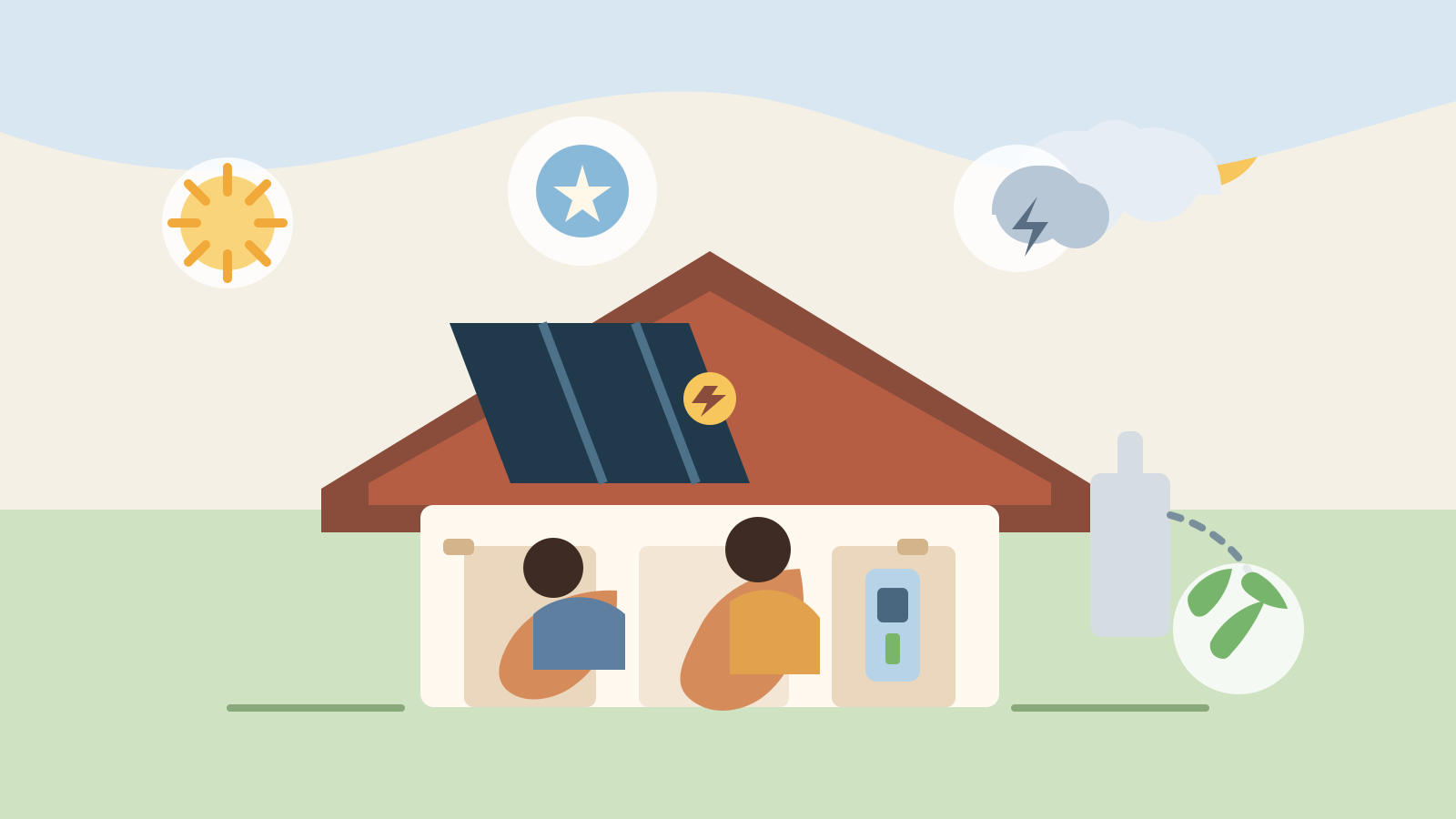
The law focuses on standard solar projects at existing one-family and two-family homes. It covers homes with a main electrical disconnect of 200 amps or less. The tool must be able to handle solar that includes a home battery, a main panel upgrade, or a main breaker change when those items are part of the solar job. A main panel is the box that sends power to parts of your home. Ask your installer if your plan fits the automated path before you sign. A larger, older, or more unusual home may still need a person to review the plans.
Fast review still needs good plans
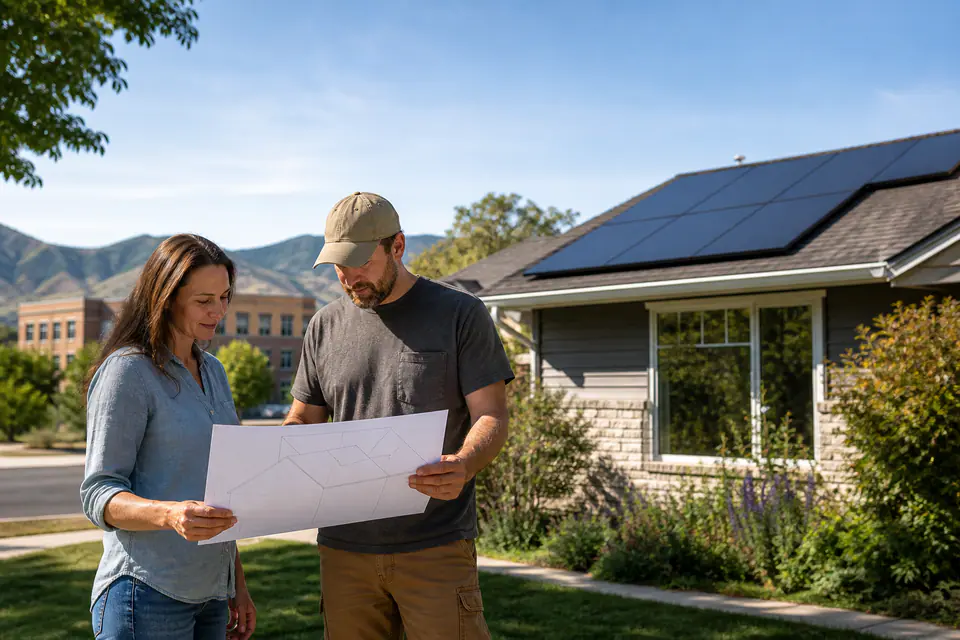
Automated does not mean loose. The permit tool checks whether a plan follows the local safety code. A code-compliant plan can receive a permit without the usual back-and-forth review. A plan that does not fit the simple rules can be sent to local staff for a closer look. Your quote should name the permit office, the permit fee, and the person who will submit the plans. Give the installer correct information about your roof, electrical panel, and any old solar. A wrong plan can still cause a delay, even with a faster tool.
Inspection still comes after work
The local permit is only one part of the job. After solar is installed, an inspector checks that the real work matches the approved plan and local safety rules. The Colorado law allows the automated path to be used for a large share of qualifying jobs. It does not cancel inspections. The U.S. Department of Energy says permits and inspections protect the building and the people in it. Ask when the inspection will happen and what happens if it finds a problem. Do not make a final payment before you understand that step.
The power company has its own step
A city or county permit is not utility approval. Your power company has a separate safety review called interconnection. Interconnection means the home system can connect safely to the grid. The utility gives permission to operate after its rules are met. That is the point when a grid-connected system may turn on. A faster local permit cannot skip this step. Ask your full-service installer for the expected order: permit, install, inspection, utility approval, then turn-on. Ask for the utility approval in writing before you count on solar savings or backup power.
Simple homeowner checklist
Ask if your city or county has the new automated permit path. Ask if your home and system fit its standard rules. Get the permit fee and the installer name in writing. Tell the installer about any battery, old solar, panel upgrade, or planned electric car charger. Ask when the local inspection is expected. Ask which power company forms are still needed. Do not turn on a grid-connected system before permission to operate. Keep copies of the permit, inspection result, and utility approval. Faster paperwork is useful, but safe work and clear approval still protect your home.
Sources
- Colorado General Assembly HB25-1096 automated permit requirements
- Colorado enacted bill text on home, battery, panel, and local-government scope
- National Renewable Energy Laboratory on automated permit timing and eligible solar projects
- U.S. Department of Energy on permitting, inspection, and utility connection