Why Tucson battery owners are hearing about this now
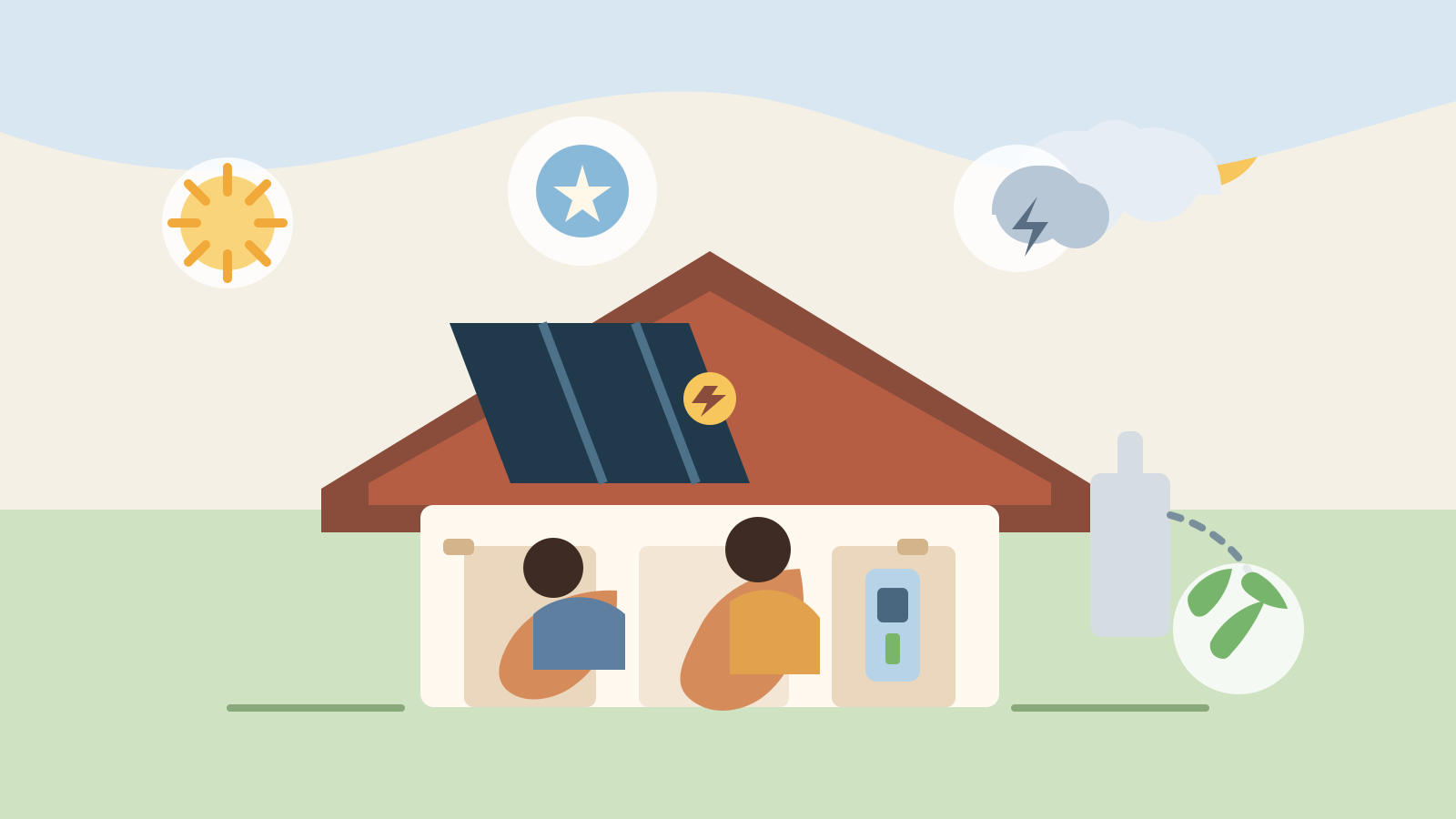
Tucson Electric Power has a live home battery program called Energy Storage Rewards. TEP says it can call up to 100 events each year. It can call only one event per day. Most events last one to four hours. The summer season runs from May through September. The winter season runs from October through April. The U.S. Department of Energy says virtual power plants help the grid during busy hours by using many small home devices together. For a homeowner, that means your battery may do two jobs. It may help your house during an outage. It may also help the grid on hard days.
What the program really does
This is not a rebate at checkout. It is pay after performance. TEP says your battery partner prepares the battery before an event. Then the battery discharges during the event window. TEP says most summer events aim for late afternoon and evening peak hours. The page says you do not need to charge the battery by hand before an event. If you have solar, the battery may charge from your panels. If you do not have solar, the battery may charge from the grid. TEP also says you can opt out of events. There is no penalty fee. But an event with no battery help counts as zero toward your season average.
How the money works
TEP says the program pays 120 dollars per kilowatt, averaged over the season. The page gives a simple example too. A battery that averages 3 kilowatts during events could earn 360 dollars for one season, or 720 dollars for a full year. That sounds useful. But TEP also says there is no performance guarantee. Your payment depends on battery size, settings, internet connection, event timing, and whether you opt out. TEP says you can join mid-season, but earlier event hours in that season count as zero. So a late signup can water down the first payment.
Backup power still comes first
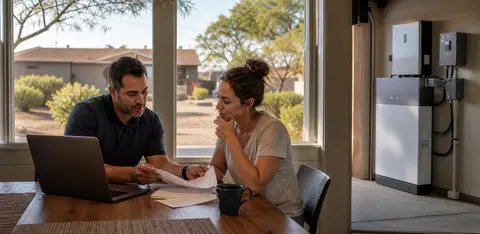
TEP says you can choose how much energy stays in the battery for your own use. This is your event reserve margin. If you hold back more power, you earn less. If you hold back less power, you may earn more. That sounds simple, but it is really a comfort choice. Ask what stays on during an outage. Ask about the fridge, some lights, the internet, medical gear, garage access, and one small cooling plan. If those loads matter more than a bill credit, set the reserve higher and accept lower event pay.
Your rate plan can change the answer
TEP gives an unusual warning on its own page. It says joining the program could raise yearly energy spend for some homes. The page says typical battery homes on basic or time-of-use plans could see yearly energy spend rise by about 5 to 15 percent. It says demand-plan customers could see a much larger jump. TEP says the seasonal payment should more than offset that for a typical home. Still, do not take that on faith. Ask your installer to show the battery program math on your real TEP rate plan. Ask what happens if the battery charges from the grid after an event.
Do the quote math without old federal credit talk
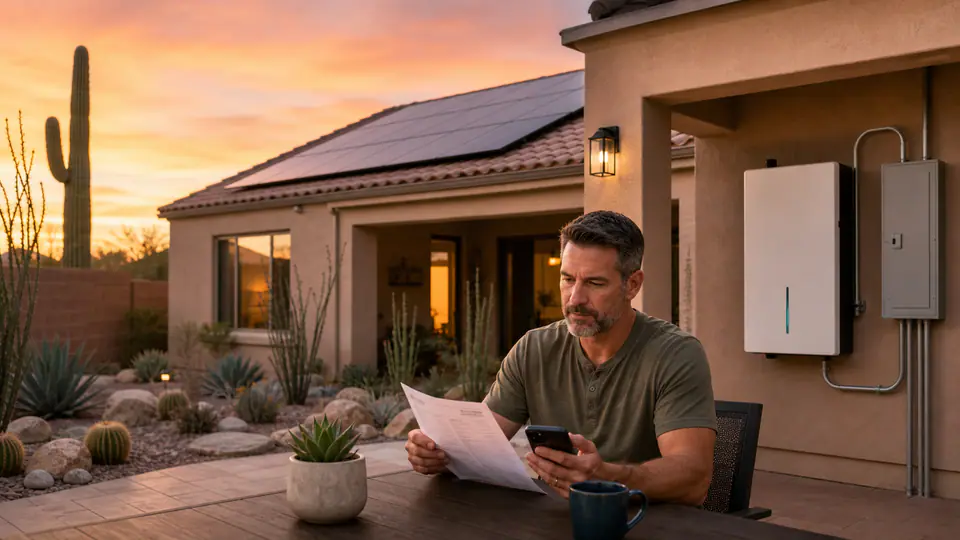
For a new 2026 homeowner project, the old federal tax credit should not be used as a sales crutch. The IRS says the Residential Clean Energy Credit is not available for property placed in service after December 31, 2025. That means your battery and solar quote should stand on its own price. Ask for the cash price first. Then ask for the TEP event pay as a separate line. Clean math is easier to trust. It also makes it easier to compare one battery brand or installer against another.
Simple homeowner checklist
Ask if your battery model is approved for TEP's program. Ask if your system will stay inside your utility approval rules during events. Ask what reserve margin the installer plans to start with. Ask how to opt out before a storm or outage risk day. Ask whether your battery may charge from the grid after an event. Ask when TEP sends the bill credit after each season. Ask for one page that shows backup loads, rate-plan math, and program pay with no old federal homeowner credit added in.